
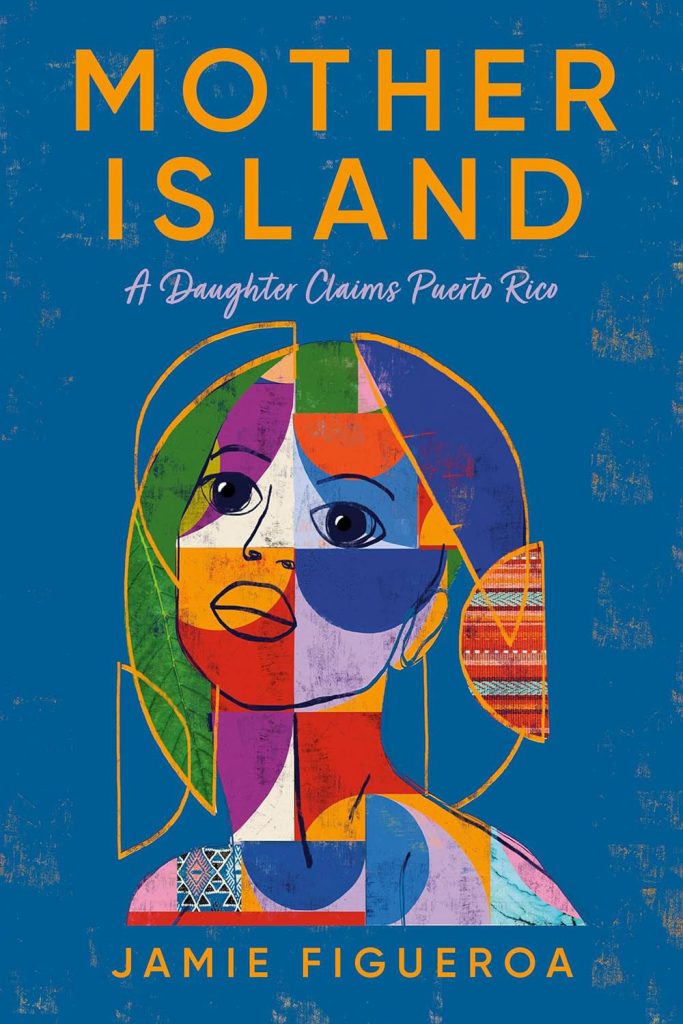
This month’s reading picks from the Caribbean, with reviews by Shivanee Ramlochan of Mother Island: A Daughter Claims Puerto Rico by Jamie Figueroa; Isolario/Islarium by Adalber Salas Hernández; Kipling Plass by Berkley Wendell Semple; and The Believers: Stories by A.K. Herman
Mother Island: A Daughter Claims Puerto Rico
by Jamie Figueroa (Pantheon, 272 pp, ISBN 9780553387681)
What becomes of the border-barricaded daughter set on the periphery of her own mother’s story? This journey — by turns revelatory and barb-wired — is the subject of Mother Island, which makes an uncertain and tempestuous vessel out of Figueroa as she reaches for a language, a history, a matriarch. The memoirist’s gratifying insistence on painting herself in unflinchingly honest tones rings with the clarity of a well-tempered bell throughout this absorbing prose. A serpentine, shame-suffused relationship with the Spanish language reveals the author’s restlessness and palpable hunger for more of her Taíno ancestry. “Everyone knows someone like me,” Figueroa tells us in confessional mode, “a fumbler, a wounded tongue, who can understand what’s being said but is quiet, slow to respond.” Anyone navigating a tightrope of beinghood will find themselves witnessed with loving candour here.
Isolario/Islarium
by Adalber Salas Hernández (Peepal Tree Press, 118 pp, ISBN 9781845235857)
In this spellbinding bilingual collection, Venezuelan poet Adalber Salas Hernández reveals, “the island is the site of the most unattainable, / almost inhuman longing.” A sense of indefatigable pursuit ripples in the bodies of these poems, translated into English by Robin Myers. They move into known and unknown island territories, haunting the atmospheres that their speakers are compelled to witness. It is no mistake of geography, the poet suggests, that islands have chipped themselves from looming landmasses over time, like so many defiant and fragmentary teeth. From Tenerife to Thule, the Isles of the Blessed to the Nimrod Islands, Isolario/Islarium presents us with astrolabe and sextant, daring us to be discoverers on whichever patch of grass and concrete surrounds us. As deep and as relentlessly strange as you are capable of imagining, these poems match your energy.
Kipling Plass
by Berkley Wendell Semple (Peepal Tree Press, 334 pp, ISBN 9781845235925)
When you leave a place for 40 years, don’t expect it to stand still for your return. Kipling Plass — the eponymous protagonist of Semple’s debut novel — returns to Mahaicony, Guyana, to find that his charged adolescent recollections of this place, steeped in libidinous excess, hooliganism, and political urgency, are simultaneously as he left them, and forever changed. Eschewing sepia-tinged portraits of nostalgia, Kipling Plass is a scatological romp of over 300 pages that doesn’t squander a single word. Semple excels no matter which pocket of 1970s and 80s Guyana he writes into: its hotbed of race relations; its cutthroat machinations in high and low office; its empyrean wilderness beyond risk of being culled or tamed. Named well and then abandoned, Kipling is less endearing than he is raggedly tenacious — clinging to life like a melancholy liana.
The Believers: Stories
by A.K. Herman (A. R. Phillips Press, 212 pp, ISBN 9781948788014)
Shortlisted for the 2025 OCM Bocas Fiction Prize for Caribbean Literature, The Believers is a collective unsettling — an invitation to release yourself from the tales you think you know. Herman’s debut collection of short stories calls up resolute washerwomen with defiance coded into their spines; inhuman winged boys whose horns gleam and whose flight promises reckonings; self-assured assistant professors velvet-lining their protests in protocols. These are undaunted players, powerful even in their acts of flinching and subterfuge, written with a startling immediacy. “In Bacolet, the river mumbled secrets the mountain told it on the way down,” says one survivor who wonders what the river says about her. Herman’s characters are real enough to touch, to fight, and to love — and they do this against the backdrop of a Tobago and a diaspora that knows them intimately.