
This month’s reading picks from the Caribbean, with reviews by Shivanee Ramlochan of A House for Miss Pauline by Diana McCaulay; The Proper Care of Knives by Anu Lakhan; Between Islands by Rhys Knowles; and We Were Not Kings by Robert de la Chevotière
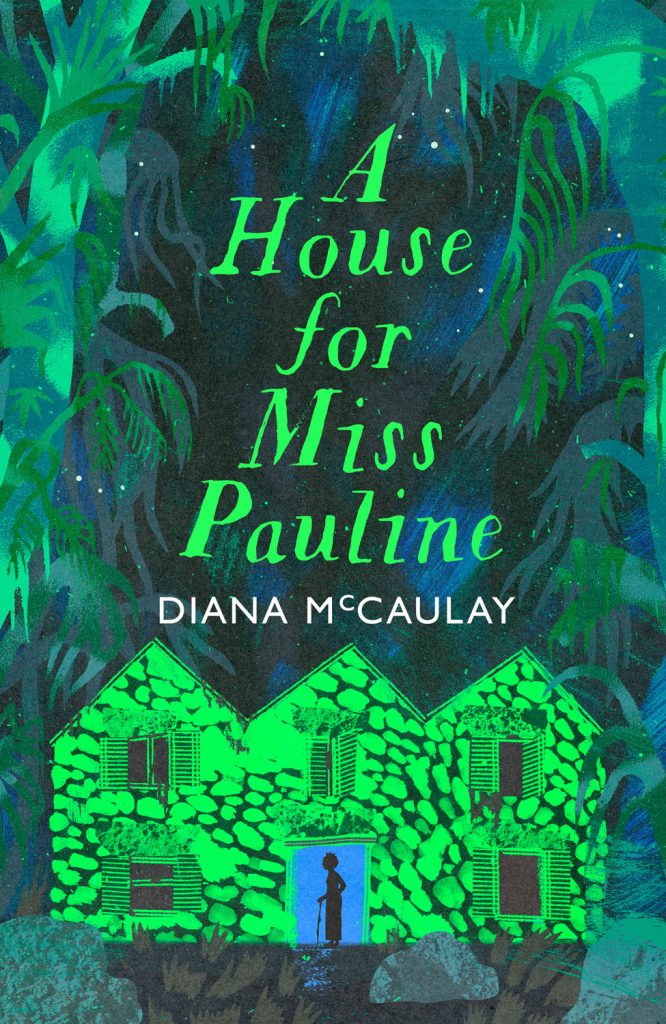
A House for Miss Pauline
by Diana McCaulay (Dialogue Books, 303 pp, ISBN 9780349704272)
“She believes help does come from the eternal hills and she’s happy to become dust. Duppy know who to frighten, she reminds herself. And that is not me.” Who trembles, when stones speak? For 99-year-old Miss Pauline, sole resident of her proudly built Mason Hall home in rural Jamaica, some secrets prove impossible to outrun. When her house begins talking to her in the dead of the countryside night, she takes action — her cutlass strapped to her side, her knowledge of the world wide web scanty at best. Readers both new and accustomed to McCaulay will admire the propulsive, immersion-worthy plotting that underpins the novel’s action. Above all, it would be impossible not to root for Miss Pauline herself — as determined, dangerous, and unforgettable a central character as one is likely to encounter in this year’s fiction.
The Proper Care of Knives
by Anu Lakhan (Argotiers Press, 91 pp, ISBN 9789768341969)
We need these poems — as incantations, as dread promises — for the world we must inhabit. Each line of verse in Trinidadian Lakhan’s full-length debut collection casts a seine of meaning into a deep, fathomless sea, assuring the reader: you will be caught and known in these syllables. The Proper Care of Knives courts attention at a microcosmic level: the placement of everyday utensils in a kitchen matters as much as the pounding hoofbeat of a horse’s gallop across an unnavigable terrain. The poet makes room for all things, the smallest of them — not coincidentally, but cosmically — being the most valuable. In the titular poem, a speaker, vigilant with love, vows, “I carry your name in my mouth / like a small stone I cannot swallow / I smooth the blade on the stone / I keep the blade clean and dry”.
Between Islands
by Rhys Knowles (Poinciana Paper Press, 154 pp, ISBN 9789769694408)
Unmoor yourself. If the voices assembled in Bahamian Knowles’ first short story collection could speak in unison, this might be their prevailing message. In often vertiginous emotional forays, we are led through toxic interpersonal seductions, economic wranglings for survival, and journeys across the several hundred islands of The Bahamas. Knowles’ hand at the fictive propeller is as steady as it is startling: some beautiful turns of phrase bookend harrowing happenings in these tales of sun-scorched grief, hubris, and vagabond longing. Terrorised by the spectres of former hurricanes, haunted by the perfume trails of paramours returning from foreign universities, these characters are all unreliable narrators — as satisfying on the page as they would be shifty and mercurial in real life. Between Islands is a bright, audacious work, unspooling the heart of not just one island, but roughly 700.
We Were Not Kings
by Robert de la Chevotière (Little A, 237 pp, ISBN 978166252935)
Salomon Destin — the teenage protagonist of this earnest, heartrending novel debut — lives his life in fear of suffocation. Born to a small place, he determines early on to quit its stultifying radius, striking out for academic success as a professional translator in Strasbourg, France. Yet Guadeloupe is not so easily excised from his heart or imagination, a land that “had become a tomb, where nothing grew but the measure of my will to leave, a will which was becoming stretched, a bungee cord wrapped against corner posts, hanging for life, unthreading.” Robert de la Chevotière — born in Dominica, raised in Guadeloupe and Bermuda — reveals Salomon’s vulnerability in a taut, rhythmic prose that invites the reader into symbolic rooms of exile and return. We Were Not Kings is both a coming-of-age narrative and a postcolonial letter to fragmented, yet enduring possibilities.