
The disparities between how cancer affects Black and White people are well documented. People of African descent are far more likely to die from the disease even when, as is the case with breast cancer, they have lower rates of diagnosis.
Likely reasons for this include genetics, income inequality, inadequate access to healthcare, cultural attitudes that lead to avoidance of regular checkups — with treatment being sought only when the disease is at a late stage — and discrimination within the healthcare system.
Another possibility has been getting more attention in recent years, thanks to the work of Jamaican medical researcher Dr Simone Badal McCreath, who is based at The University of the West Indies, Mona.
Badal McCreath had finished her PhD — which involved testing products endemic to Jamaica for cancer fighting and prevention properties — when she discovered that the tool key to conducting such tests likely meant cancer treatments were of disproportionately greater benefit to people of European descent.
Cell lines are a fairly recent discovery. Cells are extracted from cancerous tissue, kept alive, duplicated, and used to test possible treatments. Ironically, the first cell line — developed in 1951 and called HeLa — was from a Black American woman, Henrietta Lacks, who had cervical cancer and was not told tissue was being taken from her and used for medical research. Lacks’ story has since become a popular book and film starring Oprah Winfrey. And cases like these have fed wariness of the medical establishment by Black populations.
Cell line diversity is important not only among races, but within races, as there are genetic and dietary differences between Black people who live in different parts of the world
Today, the vast majority of cell lines are from people of European descent. Badal McCreath discovered that a staggering 98% of prostate cancer cell lines from the world’s major supplier were from White men.
“If we don’t have that diversity in representation, then what you will have is the therapies that are created will be more beneficial to the people whose specimens have been used to understand and create those therapies,” Badal McCreath explained in a recent Zoom interview.
Badal McCreath has since become a leading expert on the topic. Her articles have been published in prominent medical journals like The Prostate, Cancer Research, and Nature Reviews Urology.
In 2020, after many years of working on it, she created the first cell line in the Caribbean, and one of the few prostate cancer lines derived from a Black patient. Cell line diversity is important not only among races, but within races, as there are genetic and dietary differences between Black people who live in different parts of the world.
“You need representation not just from an ethnical perspective, but from a geographical perspective,” she said. “So, not just in America. Not just in Africa. But in the Caribbean. In Europe. Black men from across the globe will each respond differently to the therapy.”
Creating a cell line is a difficult process, even when one has access to funding and the best equipment and expertise. Creating one in a small, developing country where medical researchers face shortages of the necessities seemed like an impossible task.
In her book, No Cell Left Behind: A Jamaican Scientist’s Breakthrough to the Caribbean’s First Cell Line, ACRJ-PC28, Badal McCreath documents the words of discouragement she received when she shared her plans with people who had experience in creating cell lines: “One professor said, ‘Simone, I’ve tried it and it didn’t work’ … Another said, ‘Simone, I applaud you, but from my experience, this kind of work is too risky.’”
Badal McCreath believes knowledge of her work will draw funding and inspire young people to get into the field
As chronicled in the book, at times over the five years it took to develop the cell line, their pessimism seemed warranted. The success rate for developing a cell line is 5–10%.
There were challenges even before the actual research started. It took years to get funding, buy the necessary equipment and have it shipped, and put together a team that included pathologists, urologists, and a grad student assistant. Collecting tissue samples involved first signing an agreement with the medical institution, then getting written permission from the patients.
After the research started, setbacks came in various ways. They lost samples as the team experimented to find the best medium and methodology to keep the cells from dying. “Immortalising” the cells was the goal. Cells were lost to contamination. Once, a sample was lost because of a power outage! The “28” in the name of the cell line — ACRJ-PC28 — refers to how many samples it took before the team succeeded.
Badal McCreath was motivated to go on by the thought of how important her research was —the difference it could make in the lives of others. Like most of us, she knew people who had died from the disease.
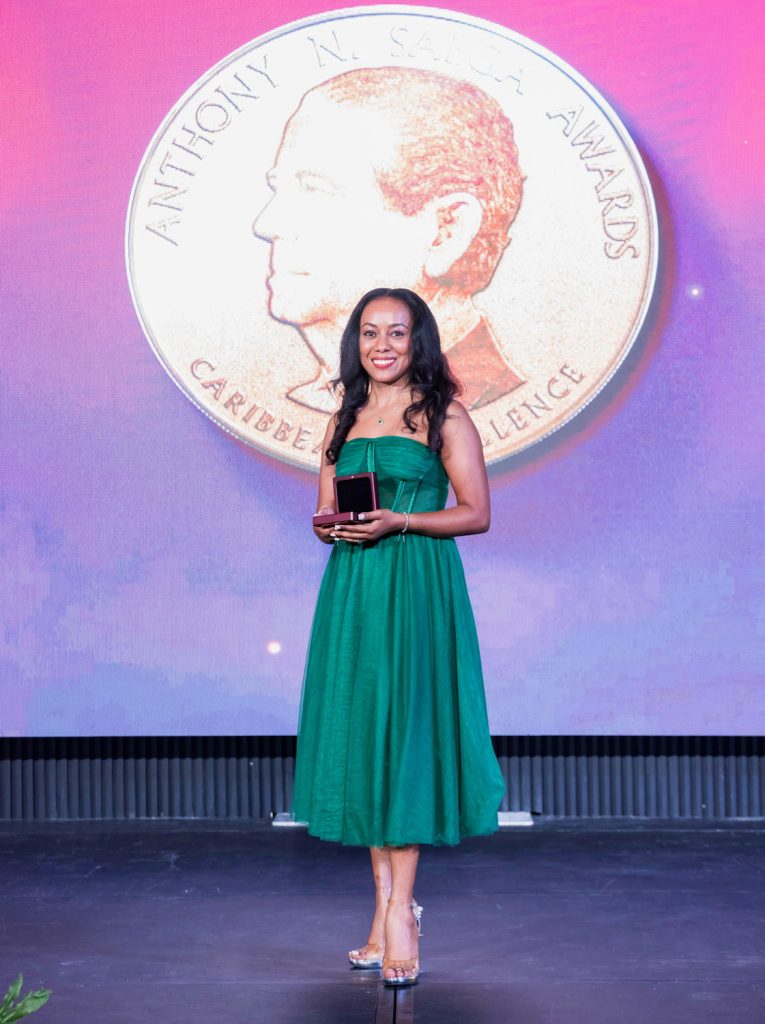
She talked about one of them — Annie, a friend she lost to breast cancer — in No Cell Left Behind. She mentioned Annie again when accepting one of the Anthony N Sabga Awards, Caribbean Excellence in Port of Spain, Trinidad, earlier this year.
“We saw her move from a healthy, fun-loving person to just going down to literal bones,” she said in the Zoom interview. “That’s what cancer does. And I think that one of the things that devastate persons so much is how much it eats away at you and takes every single thing from you. So that impacted me in being more focused on helping our Black people … our Caribbean people.”
Today, Badal McCreath has created a second prostate cell line, and three breast cancer cell lines. The subsequent cell lines were achieved more easily and quickly because of the lessons learnt from the first attempt.
Her lab is also working on more projects linked to diversity and cancer research. They’ve been testing medication on their cell lines alongside cell lines from White people. They’ve found that some of the drugs have different impacts on the two groups of cells.
Badal McCreath is part of the team putting together the Ironman Registry, a project that is collecting information from men with advanced prostate cancer from around the world. This will help researchers make comparisons.
She is also working towards conducting a clinical trial. This is another area where there’s a racial disparity. Currently most participants in these trials are White.
Being interviewed before a live audience last year at the Strategic Growth Forum, Badal McCreath discussed her work and why it was important to write No Cell Left Behind. She believes knowledge of her work will draw funding and inspire young people to get into the field.
“Jamaica is known for music. We’re known for track and field. But we’re not known for the impact that we’re making in science,” she said. “Stories like these need to be told.”