
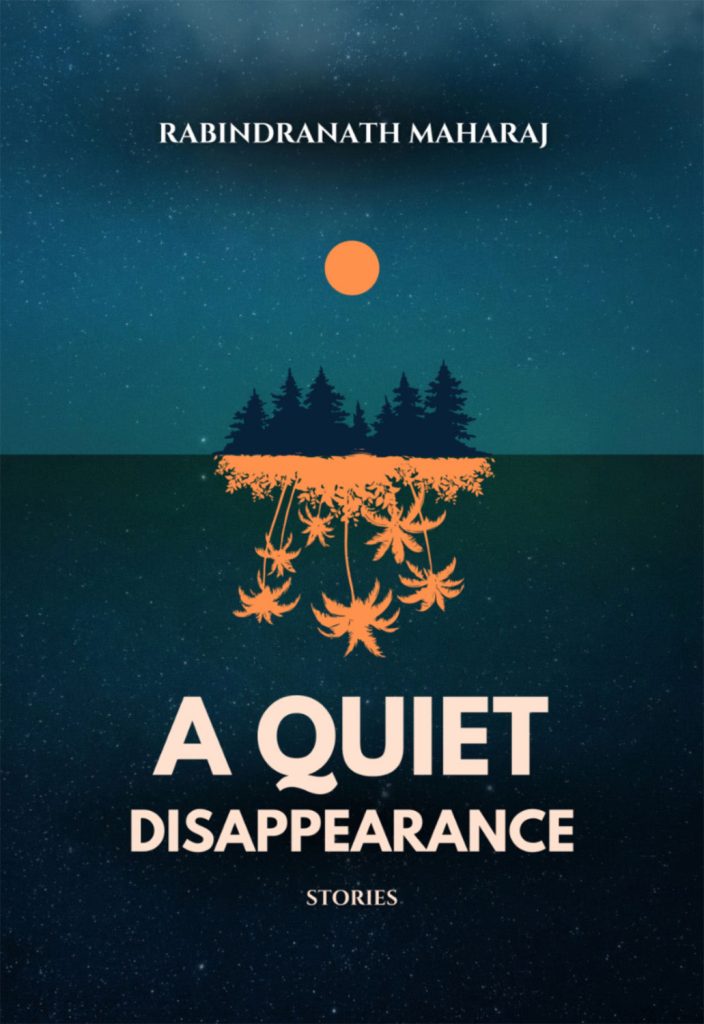
This month’s reading picks from the Caribbean, with reviews by Shivanee Ramlochan of A Quiet Disappearance by Rabindranath Maharaj; Heirloom by Catherine-Esther Cowie; The Snag by Tessa McWatt; and Putting Myself Together: Writing 1974– by Jamaica Kincaid
A Quiet Disappearance
by Rabindranath Maharaj (Mawenzi House, 208 pp, ISBN 9781774151839)
Life’s rearview mirror often points towards the heart’s true north. This is the conclusion of several figures in these wry, well-judged short stories from Trinidadian-Canadian Rabindranath Maharaj. The collection’s titular work reflects on the half-ruined relationship between a father and son, marked by illness, resentment, and calcified dreams. A scrupulous realism oversees the quarrels, loves, and deaths of Maharaj’s characters. These protagonists — from ailing septuagenarians to disaffected 40-somethings — are so unstintingly drawn that their circumstances stun with an undeniable immediacy. Wending through is the motif of departures and arrivals: entire lives become waving galleries suspended between Canada and Trinidad, bifurcating fortune-seekers and those making their farewells. Read these stories once because they remind you of someone you know, then return to them when you realise that person is yourself.
Heirloom
by Catherine-Esther Cowie (Carcanet Press, 96 pp, ISBN 9781800174795)
An inheritance of violence lingers like a mouthful of blood. The verses in Heirloom, Catherine-Esther Cowie’s debut book of poems, know it intimately. Braiding and unknotting generations of St Lucian women’s histories at the hands of oppressive and abusive men — monitoring how abuse, too, transpires from mothers to their own daughters — this is a durable, relentless body of work. Decades of an island’s history seep into these tellings, patterning the resistances of the Nèg Mawon, facing the devastations wrought through slavery and the plantocracy. As the poet draws on the voices of Kamau Brathwaite, Lord Kitchener, and Kwame Dawes, she never comes close to losing her own. Heirloom resounds with a remarkable reverse burial, an excavation of the unsaid that powerfully and persuasively exhorts, “unforget the sound of myself / return to the tongue the razed notes / return to the tongue its fly-ridden fruit.”
The Snag
by Tessa McWatt (Random House Canada, 320 pp, ISBN 9781039000049)
What can wild places, uninterrupted by human predation, teach us about our grieving? For England based Guyanese-Canadian Tessa McWatt, this razed world has never been more perilous. In this razed Anthropocene, forests burn, landmasses degrade, and the memoirist’s own mother — a fiercely independent personage — slips deeper into encroaching dementia. Faced with such dire and oppressive confrontations, the author walks deep into the forest, encountering majestic fallen trees, slowly succumbing to rot: they have become “snags”, in ecological terms — dying arboreal forms that provide critical life to other species as they disintegrate. The Snag, as both environmental manifesto and text of radical grief, offers its reader entire territories of restoration. In one of many tenderly triumphant moments, McWatt tells us, “I want to venerate my family for what seems like a miracle of survival, given our ancestry. We are survivors, a forest that regenerates.”
Putting Myself Together: Writing 1974–
by Jamaica Kincaid (Farrar, Straus and Giroux, 352 pp, ISBN 9780374613235)
Fifty years of accumulated nonfiction from Antiguan-American Jamaica Kincaid reveal and uphold the writer at something beyond the mere height of her powers. They document the density, hilarity, and sheer unrepudiated force of a life lived — and written about — with an enviable refusal to acquiesce. These essays, reviews, opinions, introductions to the works of other writers, and longform interview put colonialism, classism and misogyny to rout — challenging misconceptions sometimes with brimstone, other times with a slicing satire and the lexical equivalent of a deadpan stare. Kincaid’s abiding literary legacy is that she can say, with plainness, what it might take others incomprehensible volumes to get right. Putting Myself Together is her getting it right, repeatedly, then sharing it with the world. These are Black Caribbean nonfictions for discovering anew what language can create.