
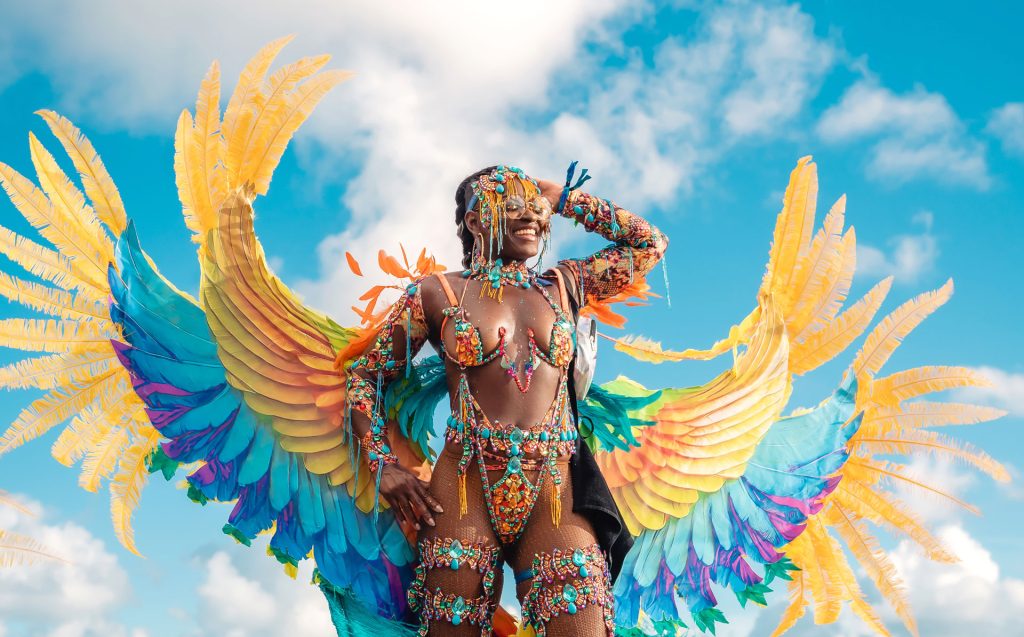
That festive feeling
It’s Carnival time again across the region, starting with Monserrat Carnival (through 1 January), St Kitts’ Sugar Mas Carnival (through 2 January), St Croix Carnival (through 3 January), and Junkanoo Bahamas on Nassau and Exuma (1 and 4 January).
Sir Derek Walcott once described St Lucia as a society that values style, physical performance, grandeur and large gestures. This remains true as it honours his and Sir Arthur Lewis’ achievements (St Lucia’s two Nobel laureates) with over 30 events — exhibitions, seminars, dances, and races — at the Nobel Laureate Festival (5–31 January).
The feast of the Epiphany (6 January) marks the end of the 12 days of Christmas, and commemorates the three magi (aka the wise men or kings) visiting the infant Jesus. Puerto Ricans celebrate this day — El Día de Reyes or Three Kings Day — with gift-giving, family dinners, and three kings cake, which conceals a tiny baby doll representing Jesus. The Dia de Reyes Festival & Parade in Juana Díaz sees bearded actors with colourful robes ride through the streets on horseback portraying the kings!
Later in the historic Old San Juan district, thousands flock to the San Sebastian Street Festival or La SanSe (15–18 January). Locally known as the end of Christmas, attractions include circus performances, live music, arts and crafts, concerts and parties, the Comparsa de los Cabezudos (“parade of the big heads”), and much more.
In Martinique, Festy’Roi (7 January) is the first event on their Carnival calendar, where the streets of Le Lamentin welcome parading bands and residents disguised in wigs, masks, and colourful clothes to get the season started!
Further north, dynamic artist collaborations, workshops, documentary screenings, and concerts draw music lovers to Haiti’s Port au Prince International Jazz Festival or PAPJAZZ (7–10 January).
And in Miami, explore the unique architecture and history of Miami’s Art Deco District during Art Deco Weekend (9–11 January). Guided tours, special exhibitions at the Art Deco Museum, a classic car show, and lectures are itinerary highlights.
Foodies can’t go wrong with the Cayman Islands’ Cayman Cookout (14–19 January), showcasing renowned chefs and beverage experts in a vibrant atmosphere. Not to be outdone, Carriacou and Petite Martinique’s newest festival celebrates their fishing and seafood heritage with the Lobster & Lambi Fest (16–18 January). Make sure to participate in the live cooking demos and fishing competitions.
The remarkable strength, creativity, and resilience of Jamaicans fuels many of their celebrations. Hurricane Melissa ravaged St Elizabeth parish — the home of Cockpit Country — making the Maroon Fest (6 January) take on extra significance. The festival traditionally honours those who escaped enslavement and settled in these iconic Jamaican mountains. Descendants commemorate the legacy of Captain Cudjoe and the 1738 signing of the Peace Treaty with the British through rituals, storytelling, dances, and Indigenous-centred conversations.
Meanwhile, Rebel Salute (17 January), Reggae Month (February), and the Wickie Wackie Music Festival (12–14 February) celebrate Jamaica’s reggae music and culture in style.
Music lovers won’t want to miss St Vincent & the Grenadines’ Mustique Blues Festival (21 January–4 February) at Basil’s Bar — where proceeds go to the Basil Charles Educational Foundation — and the Bequia Music Festival (24 January–1 February).
Sailing season brings Barbados Sailing Week (15–22 January); Grenada Sailing Week (25–30 January) and the Spice Island Billfish Tournament (26–30 January); and the RORC Nelson’s Cup Series (17 February) in Antigua. All test endurance, strategy, and seamanship in exhilarating competitions.
Back on land, the historic bus tour at the Barbados Holetown Festival (7–14 February) is a crowd favourite. Attendees also look forward to the Barbados Police Service Tattoo, kids’ beach wrestling, mixologist competitions, a 5K, street fair, and lots more. As the saying goes, there’s never a dull moment in Barbados.
Over in Belize, the four-foot-wide “narrowest main street in the world” (according to locals) hosts the Placencia Sidewalk Arts & Music Festival (7–8 February) — filled with charm, art, upbeat music, and delicious food.
The historic San Carlos de La Cabaña fortress in Cuba’s capital Havana is among the venues for the Havana International Book Fair (12–26 February). The event features poetry readings, evening concerts, children’s activities, art exhibitions, and much more.
Meanwhile, myriad flavours meet appreciative palates during the year-round BVI Food Fete. Enjoy Jost Lime & Dine (14 February–14 March), and the delights on offer from world-class restaurants in Taste of Virgin Gorda (28 February).
Red lanterns and decorations symbolising luck and prosperity adorn Suriname’s capital city Paramaribo for the Chinese New Year or Spring Festival (17 February). A public holiday, locals celebrate with traditional lion and dragon dances, family gatherings, and fireworks.
Celebrating its 30th anniversary this year, Guadeloupe’s FEMI Festival (21–28 February) is one of the year’s earliest Caribbean film festivals, showcasing local and international francophone documentaries, shorts, and feature films.
And in Guyana, Mashramani — celebrated on Republic Day (23 February) — brings masqueraders and colourful floats together in a massive street parade through Georgetown in celebration of national pride and progress.
Carnival calendar
From Curaçao’s tumba to Puerto Rico’s bomba and Trinidad & Tobago’s soca music, our region comes alive with pre-Lenten carnivals that pulse with rhythm, celebrate freedom and creativity, and epitomise catharsis.
The celebrations — from music, to costumes, parties, parades, rituals, and other cultural staples — vary from island to island, country to country. And of course, there is none grander in the region than the “Mother of All Caribbean Carnivals”: T&T Carnival. Activities begin immediately after Christmas, culminating 11–17 February. Don’t miss competitions and events spotlighting soca, calypso, and steelpan (Panorama); elaborate costumes (from traditional mas characters to Carnival kings and queens); kalinda or stickfighting; the Kambule Riots re-enactment; J’Ouvert; and the parade of the bands on Monday and Tuesday.
Here’s a round-up of the myriad Carnival celebrations happening across the diaspora.
Guadeloupe Carnival
(1 January–18 February)
Aruba Carnival
(2 January–15 February)
New Orleans Mardi Gras
(6 January–16 February)
St Martin Carnival
(7–18 February)
Curaçao Carnival
(8–18 February)
Carnival of Oruro, Bolivia
(9–18 February)
Kayak Mas or Carriacou Carnival
(11–17 February)
Carnaval de Ponce, Puerto Rico
(12–17 February)
Rio de Janeiro Carnival, Brazil
(13–21 February)
Barranquilla Carnival, Colombia
(14–17 February)
Carnaval de la Martinique
(15–18 February)
Carnaval de San Pedro, Belize
(16–17 February)
El Callao Carnaval, Venezuela
(16 February)
Ecuador Carnival
(16–17 February)
Mas Domnik aka The Real Mas
or Dominica Carnival
(16–17 February)
Carnaval La Vega, Dominican Republic
(27 February)