
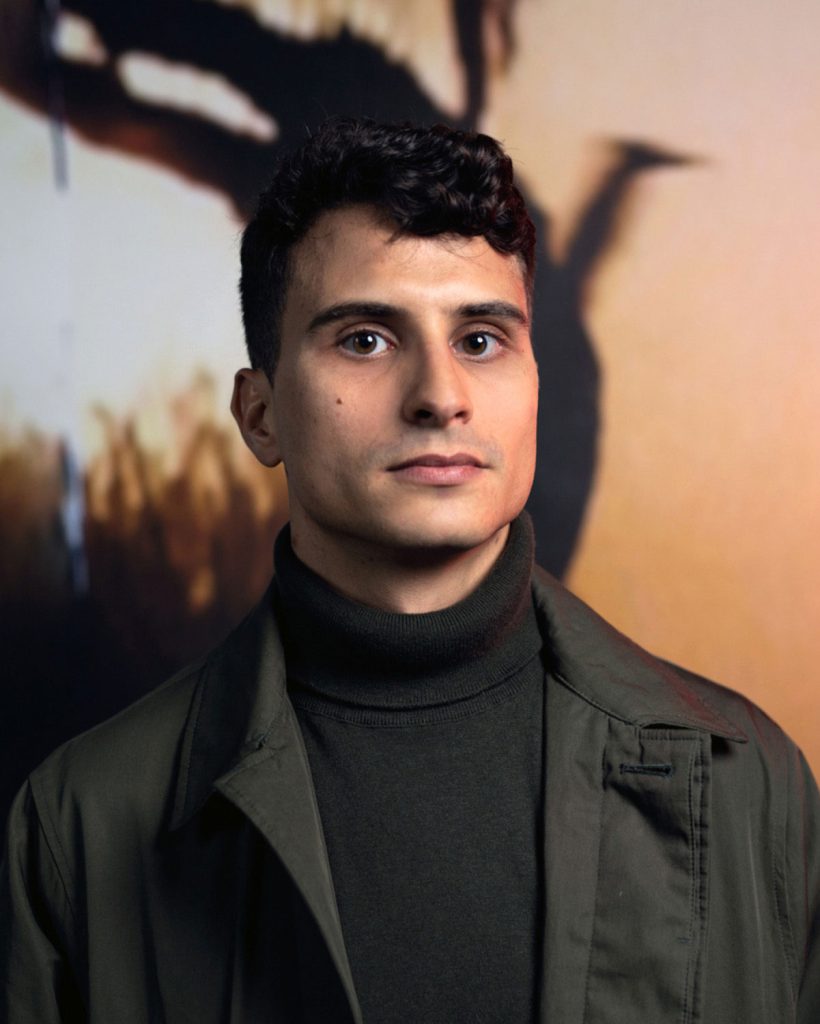
Jonathan Ali talks to David Bim, the Cuban director of To the West, in Zapata
Landi and Mercedes live a precarious life in the Zapata swamp, a nature reserve in western Cuba. In order to provide for their son Deinis, who is ill, Landi spends weeks alone in the heart of the swamp illegally hunting crocodiles. Meanwhile, Mercedes cares for the boy by herself, awaiting her husband’s return and for them all to be united before Landi is off again, in an ongoing cycle of togetherness and separation.
In his first documentary feature, Cuban filmmaker David Bim has crafted a noble portrait of survival, a tribute to one couple’s love — for their son, for each other — set against a backdrop of privation and social unrest. He spoke with Jonathan Ali about the eight-year-long process of making his profoundly tender and moving film.
How did you meet Landi, Mercedes, and Deinis?
I travel a lot in Cuba, often alone. I was thirsty and walked into a small house asking for water. There I met a woman whose smile captivated me. We talked for hours, and a relationship began that, eight years later, has brought me here.
I often wonder why Mercedes smiled so much that day. We became close friends and have shared a great deal since then. Five years went by before I filmed the images of the film. Soon I realised there weren’t many reasons in their lives to smile. That brought us even closer. Mercedes often suffers — for her son, for Landi. The pandemic only made everything harsher. Her humility and resilience inspire me.
Was it difficult to convince the family to make the film with you, given the challenges involved?
We have shared far more than simply deciding whether or not to make a film. Our relationship is grounded in the coherence of a family: mutual care, accompaniment. We know the risks, but also the strengths. The testimony of their lives carries a force that will outlast our historical moment, beyond politics. Cinema is more powerful than politicians.
What was the process of filming like — with Landi in the swamp, with Mercedes and Deinis at home?
One must understand something: putting a camera between two people is always violent, in the sense that it alters their intimacy. Intimacy exists thanks to the absence of eyes, and a camera is the opposite. We cannot just pretend it isn’t there, because we change our behaviour when we feel filmed. But if you spend enough time, with enough consistency between how you behave when the camera is there and when it is not, intimacy is restored. For years we kept each other company without speaking much. They moved; I followed. My presence, and that of the camera, ultimately became part of their lives, and their intimacy flourished.
You made this film with a crew of one: yourself. Why?
It wasn’t only about filming. It was a decision about how to live. At times it was tough. I ended up convinced it wasn’t just my first film, but also my last. But instead of making me sad, that conviction gave me courage. It stripped me to the essential. I told myself: if this is to be your only film, then make it your way.
Sounds — of nature, human breathing — are key to the film.
When I decided the film would be in black and white, I realised colour would be its soundtrack. Colour gives depth, and the cinematic image is less deep than our vision — it flattens a 3D experience into two dimensions. Without colour, it becomes even flatter — which allows sound to be more expressive, to carry the depth of cinematic experience.
Ultimately, the film transcends everyday reality, taking on a myth-like quality.
While making this film, I reread The Myth of Sisyphus several times. I understood that time is not the same for everyone. Neither is the capacity to choose. The most vulnerable classes cannot be free, because they are not allowed the capacity to choose how to live. Yet the love for a child is tireless. It exists somewhere between heart and gut, and it does not negotiate. That love does not fear pain, repression, or death. From there, we are still permitted a condition of freedom. It resides in actions: in the strength to push the rock up the hill again and again, in absolute anonymity, lies the love for a child who needs you.
To the West, in Zapata (2025)
David Bim
Cuba, Spain • 74 minutes