
[ad_1]
There’s nowhere in the region quite like Guyana — a country with rich natural and cultural heritage, and now one of the fastest growing economies in the world
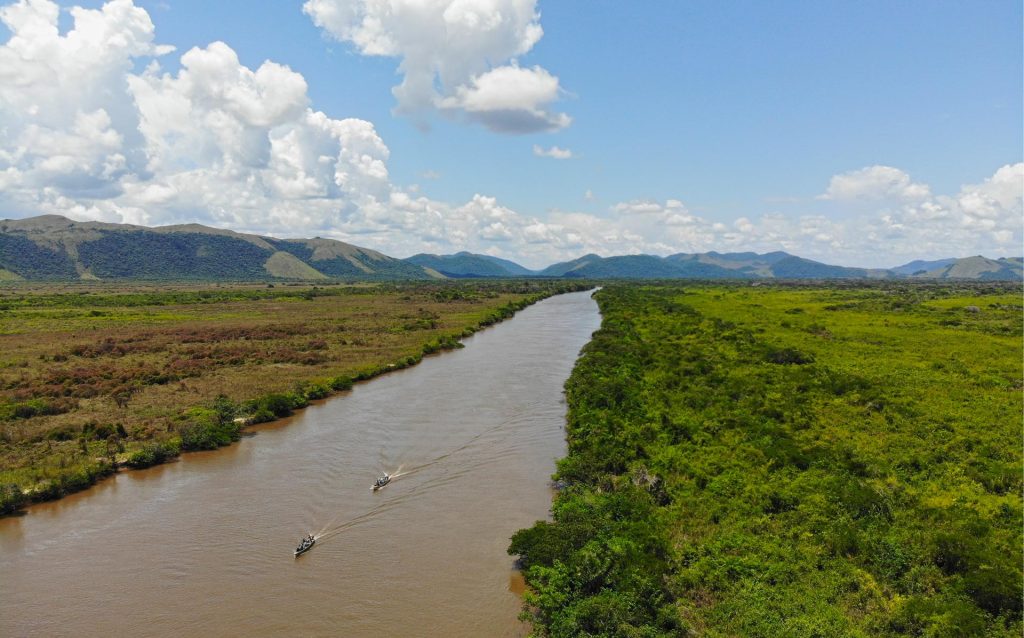
Explore “the land of many waters” from the inland rivers to the coast — all teeming with tremendous biodiversity. There’s the Rupununi River, winding through the rolling savannahs in Guyana’s southwest, bisected by the Kanuku Mountains. Several Indigenous communities run eco-tourism outfits, serving as hosts and guides.
The Rupununi is a tributary to the mighty Essequibo, which has several resorts along its lower end. The river’s west bank is home to the renowned Iwokrama International Centre for Rain Forest Conservation & Development, which manages 1,432 square miles of rainforest. Its treetop canopy walkway is absolutely thrilling.
Guyana’s stewardship of its vast natural resources is part of why the country is considered a net-zero emitter of carbon, and is the only country in the world that is 100% food independent (without the need to rely on food imports).
In the north, the unspoilt, 90-mile Shell Beach is a haven for four species of sea turtles. And inland, please do go chasing waterfalls. There’s Orinduik Falls, offering a dramatic setting of cascades and pools, with the Pakaraima Mountains in the distance (home to Mt Roraima, a popular safari destination) and Brazil just 500 feet away across the river.
Kaieteur Falls — the centrepiece of a national park — is perhaps Guyana’s most iconic natural attraction: the world’s largest waterfall by volume, with a 741-foot plunge (that’s twice the height of Victoria Falls and four times the height of Niagara).
With much of Guyana’s coast actually below sea level, the innovation of the 17th century Dutch leaves us with fascinating canals and kokers — an elaborate series of dykes, canals, and sluice gates that prevent the coastal towns and cities from flooding. And they’re all protected by the iconic Sea Wall, which stretches for miles and shelters the capital Georgetown and nearby villages — and also serves as a public gathering spot.
If you love culture and history, take in the distinctive wooden architecture of Georgetown, and make sure to visit the 1763 Monument — depicting the heroic revolutionary Cuffy, and commemorating the first major uprising of enslaved Africans in what was then Dutch Guiana.
Berbice is the third of the original Dutch colonies — alongside Essequibo and Demerara — and long celebrated as the birthplace of Guyana’s greatest cricketers and writers. It’s also known for its fertile land, while the New Amsterdam Heritage Trail boasts a series of historic buildings.
The country’s many ethnic influences — Indigenous, African, Indian, Dutch, Portuguese, Chinese — give Guyana’s cuisine a mouth-watering diversity. You can’t leave without trying pepperpot, metemgee, roti, cookup rice, garlic pork, fried river fish — that’s even before you come to desserts, like salara. Just remember: an old saying claims if you eat labba (a kind of wild meat) and drink creek water, you’ll find yourself returning to end your days in Guyana…
Related
[ad_2]
Source link