
[ad_1]
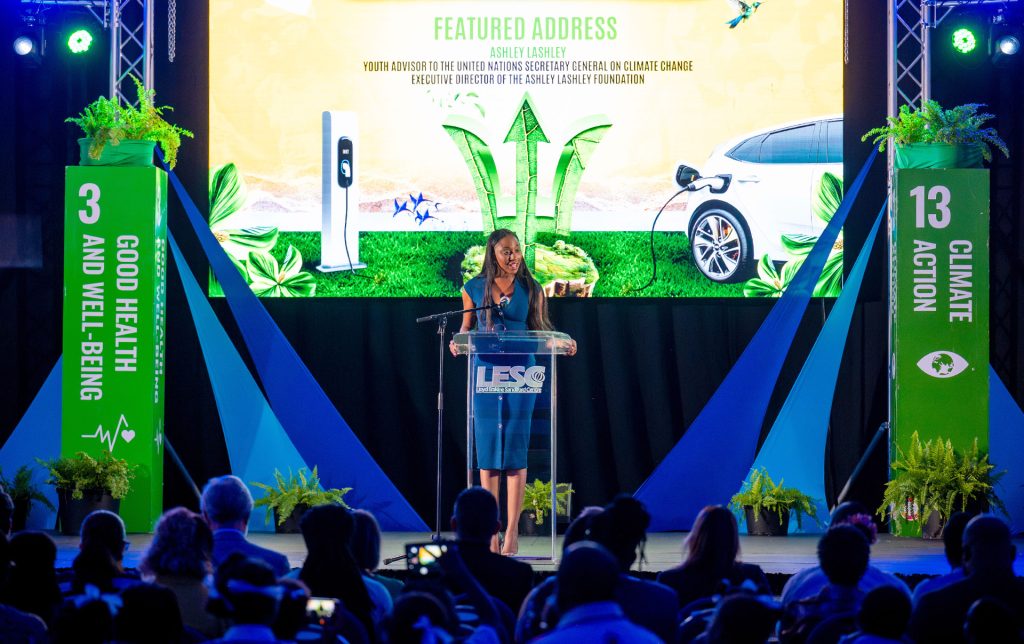
After Hurricane Melissa — one of the most powerful hurricanes ever recorded — swept through the Caribbean, taking lives and causing untold damage in Jamaica and Haiti, 25-year-old Barbadian climate change activist Ashley Lashley used her column in Barbados’ Nation newspaper, “Youth & the Truth”, to pen a powerful statement on the issue.
“We can no longer treat these disasters as isolated events. They are the result of a global system that values profit over people, pollution over protection,” she wrote. “We can’t keep rebuilding without reforming. We can’t keep grieving without demanding accountability. And we can’t keep pretending that this is just the weather. It’s the result of choices made by those who ignored the science for too long.”
Lashley has become one of the region’s leading voices on the issue as, across the world, young people are increasingly at the forefront of a crisis that will have the greatest impact on them, and on which progress has been far too slow.
The effort of Pacific Islander university students led to a landmark opinion last July from the world’s highest court, the International Court of Justice. It held powerful countries responsible for climate change and concluded that the small countries most affected were owed compensation.
Among the increasing number of climate change-related lawsuits are those brought by very young people.
The landmark case Juliana v United States — filed in 2015 by 21 plaintiffs who were teens and young children — argued the government violated their constitutional rights by not taking action to reduce the burning of fossil fuels, which authorities knew contributed to global warming. The case got all the way to the Supreme Court, which declined to consider it.
A similar case brought by a group of young people in 2020 — Neubauer v Germany — had more success, with the German Federal Constitutional Court ruling the government had to take more action to reduce greenhouse gas emissions.
And Sweden’s Greta Thunberg, 22, has in many ways become the face of the issue, after coming on the scene at 15 when she led protests outside the Swedish parliament.
Last August, Lashley was appointed to the United Nations Secretary-General’s Youth Advisory Group on Climate Change. Established in 2020, each group serves for two years, and Lashley is just the second person from the Caribbean to do so. She spoke to Caribbean Beat via Zoom just before leaving for Brazil to attend the COP30 international climate change meeting.
“More young people are getting involved in climate justice and climate advocacy,” she said. “I think it’s based on seeing these stories over the years, and hearing the cries from within our communities.”
Lashley got involved in social advocacy at 16 when she founded Schools Against Non-Communicable Diseases. She wanted to do something about unhealthy eating and the impacts she observed among her peers.
Through the organisation, she visited schools to educate young people, and eventually saw the connection between health and the environment. She formed the Ashley Lashley Foundation in 2019 to marry those concerns.
The foundation’s marquee activity is the global HEY (Healthy & Environment-friendly Youth) Campaign, which offers young people training opportunities and grants for deserving projects related to health and environment.
Among the increasing number of climate change-related lawsuits are those brought by very young people
One project in Nigeria built toilet facilities from used plastic bottles. Another provided training and equipment to women seaweed farmers in St Vincent & the Grenadines.
The campaign brings youth together from around the world as HEY Ambassadors, whose attendance at COP the foundation facilitates. Additionally, the HEY Global Youth Network Summit is an annual virtual event. The theme for last September’s edition was “Future Proof: AI, Advocacy & Youth for Climate-Health Resilience”.
“There’s so many other young people that you could connect to globally,” said Lashley. “And that was the idea behind HEY. I was travelling, representing my country as a youth advocate. But in a room of over 500 youth globally, I was probably the only Caribbean person there the majority of the time. Through HEY, what I wanted to do was build bridges between youth from the Caribbean and those across the world.”
Last year, Lashley also received the Phoenix Award, the top honour at the Barbados National Youth Awards. “More programmes or initiatives like Youth Awards need to happen across the entire Caribbean region,” she said. “Because it shows young persons that [there are people] out there looking at the work you’re doing, and what you’re doing has a place within society.”
“The response was very encouraging,” she said of her experience after receiving the award. “Many did come up to me and ask how I got involved, how I started my journey, and they also want to be involved in the work I’m doing, or they want to start their own NGO. So, I think when you’re recognised, you become a mentor for others, and I think that that is important when it comes to the sustainability of programmes and initiatives.”
The appointment to the Youth Advisory Group on Climate Change was another important form of recognition. The advisors liaise with the relevant UN agencies in their region and meet regularly with the Secretary-General, the Special Adviser to the Secretary-General, and Assistant Secretary-General of the Climate Action Team — who happens to be another Barbadian, Selwin Hart.
“Young people’s fearless advocacy has been pivotal in the fight against the climate crisis,” said Secretary-General António Guterres upon announcing the group, before later doubling its size from seven to 14 members. “That means more space for young voices at the table, more space for youth leadership and more space to shape climate action. To young people everywhere, don’t give up,”
Reflecting on the appointment, Lashley said: “It felt very humbling to note that persons within the United Nations bodies were paying attention to the work I was doing on youth engagement [around] climate change over the last seven years.” She says that it shows the UN has “a level of commitment to ensuring that youth voices are included.”
And Lashley is among the tireless young people making salient contributions to the movement. “Through the Ashley Lashley Foundation, I’ve recognised that there’s so many young innovators out there,” she said.
“For me, youth bring innovation and creativity to the table. Energy and persistence for sure, and I would say digital savviness as well,” she continued. “Far more resources need to go behind those young innovators who are helping solve and being a part of the climate solution.
Related
[ad_2]
Source link