
[ad_1]
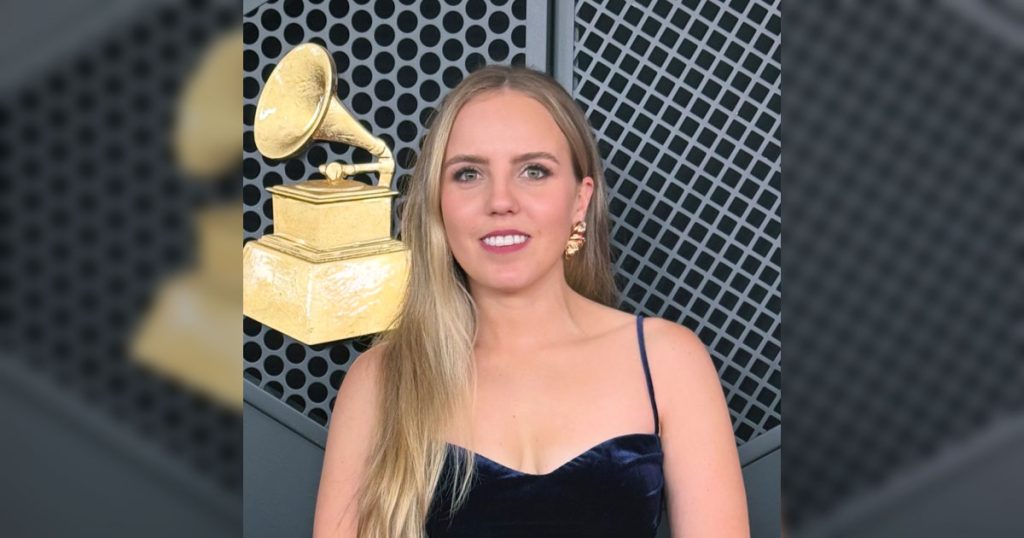
Amid the roars of applause and admiration, both from the live audience and from many miles away in her homeland, Trinidadian Jolene Mendes accepted the Grammy Award for Best Music Video at the 68th Grammy Awards on 1 February, 2026. (Notably, fellow Trini, Kwame Ryan, previously featured in Caribbean Beat, also took home the Grammy for Best Opera Recording.) This was not only a career milestone for Mendes, but an ode to her production company’s tremendous work on the music video for versatile singer Doechii’s hit single, “Anxiety”.
From a film lover at her family home on Moore Avenue in St Anns, Trinidad to the Crypto Arena in Los Angeles, Jolene Mendes has summited one of the highest peaks in the creative industry — igniting a wave of patriotic pride, receiving well-deserved commendation from government officials, and inspiring the creative industry back home.
As the creative industries continue to find their footing across the region, Mendes’ ascent sharpens the conversation around what is possible when Caribbean talent finds its place at the forefront of the international film industry. As the co-founder of production company More Avenue, she has long championed the development of the local and regional film industry. The company’s name is a deliberate invocation of origin, a tribute to her home and heritage.
“For me, More Avenue represents the stories we want to tell through film — stories that are well-grounded but globally-minded,” she says.
It is an approach that resists the idea that international success requires cultural detachment.
Released in April 2025, Doechii’s “Anxiety” has been touted as remarkable — not only for the musicality and lyricism, but for the scale and precision of the visual world built around it through the music video, which was directed by James Mackel and produced by More Avenue.
It stages anxiety as not just an abstract feeling, but a physical system subject to collapse under pressure. More Avenue constructed a full interior house set in just five days and coordinated large-scale choreography with 80 dancers at a tightly-managed location, requiring a strategic and fully integrated production pipeline.
“Producing is as if you’re the CEO of every creative project,” she says, framing the role as the central force between vision and execution, creativity and output.
With passions for both film and business, Mendes slid seamlessly into the production aspect of filmmaking during her tertiary education at the New York Film Academy (NYFA). The programme’s practical, hands-on approach gave her experience on a film set, and a wealth of connections among the student directors, writers, and actors, making it the perfect environment to foster her skills.
Producing, for Mendes, is ultimately about enabling and facilitating. It is the work of shaping the conditions to support filmmakers’ creative vision, allowing their ideas to come to fruition — and have impact. She also sees her upbringing as critical to her career trajectory: “I wouldn’t ask to grow up anywhere else.”
Friday night in the Mendes household was family movie night, which began at the video store — with some negotiation to reach consensus on what to watch. What seemed like a simple tradition became something more formative — sparking her curiosity about the unseen, behind-the-scenes processes that brought these films to life.
However, without a clear film and television industry pipeline locally or regionally, she eventually attended NYFA, graduating in 2015, before relocating to Los Angeles and beginning to make her way in the film industry there — with several of the projects she worked on doing the festival circuit.
In a region where the film industry is still developing and consolidating its infrastructure, it is not only about what is created, but what sustainable systems exist to carry that creation forward
In 2021, she was one of the producers on She Paradise — directed by fellow Trinidadian Maya Cozier — which garnered attention from major publications in the United States, and was an official selection at the Tribeca Film Festival and the Trinidad & Tobago Film Festival.
A short film she produced — Bienvenidos a Los Angeles (2022) — was shortlisted for an Academy Award nomination in 2023. She and fellow producers Vivian Johnson and Cindy Lu also received the Best Female Producers award for the short at the 2022 Toronto International Women’s Film Festival.
In 2022, Mendes co-founded More Avenue — “a lifelong dream of mine” — alongside two trusted partners, Sophia Sabella and Pablo Feldman. What began as a creative partnership has steadily evolved into a reputable production company with a slate spanning film, commercials, and music videos.
Producing a range of projects and amassing several accolades along the way, the More Avenue-produced film Ugly Cry (2026) was selected for and debuted at the SXSW Film Festival, while Edge of Everything (2023) secured Best Film at the Exground Film Fest. They have produced music videos for well-loved artists, including Schoolboy Q and Becky G. And the team has collaborated with brands such as AMC Networks and Reddit, bringing a cinematic storytelling approach to every project.
Although buoyed by her successes, Mendes is very candid about the realities of building a film production company. It demands persistence, adaptability, and a high tolerance for uncertainty. The days are long, often 16–18 hours, with producers typically first on set and last to leave. Rejection, she says, is constant, and successes can feel delayed and uncertain.
“It’s such a hard business to break into,” she says, “and if you’re not genuinely passionate about it, you won’t make it.”
For Mendes, even success is just another moment along the journey — not a sign of having “arrived”. The Grammy has come to signify persistence over time, not just raw talent.
“In the moment I won the Grammy, I completely blanked out,” she remembers. “I knew there was a chance, but look at who we were up against: some of the most talented artists and best videos.” (Music videos from Sade, OK Go, Clipse, and Sabrina Carpenter were the other nominees in their category.) “This was all so surreal for me … It has only just sunk in what an achievement it was.”
Lauding the artist, the director’s vision, and all the talent involved in the making of the “Anxiety” video, Mendes says a spirit of collaboration is necessary on every project. She also feels that this approach is a crucial to building a regional film industry, recognising that support for one another in the creative space is too often lacking.
Still, Mendes remains optimistic, as she sees filmmakers creating communities, staging festivals, “finding a way for us all to come together, tell stories and create — and I hope that it will eventually reach broader audiences”.
Contributing to the development of the Caribbean’s creative ecosystem is a major driver for her. Having been born and raised in a place brimming with creativity is a gift she does not take for granted. The region’s challenge is not the absence of talent, but the absence of sustainable infrastructure to develop that creativity — something she navigates by endeavouring to work with Caribbean creatives, and pinpoint opportunities for investment into Trinidadian film.
Beneath a fast-expanding portfolio, awards, industry recognition, and international collaborations, her original impulse remains unchanged. She wants to tell stories, and to facilitate the telling of Caribbean stories.
Mendes is focused on fostering an enabling environment for these stories to move into larger markets, to travel, compete, and to be produced at scale. In a region where the film industry is still developing and consolidating its infrastructure, it is not only about what is created, but what sustainable systems exist to carry that creation forward.
“Film is the focus,” Mendes says. “It’s where I started. And it’s where I want to end.”
Related
[ad_2]
Source link