
[ad_1]
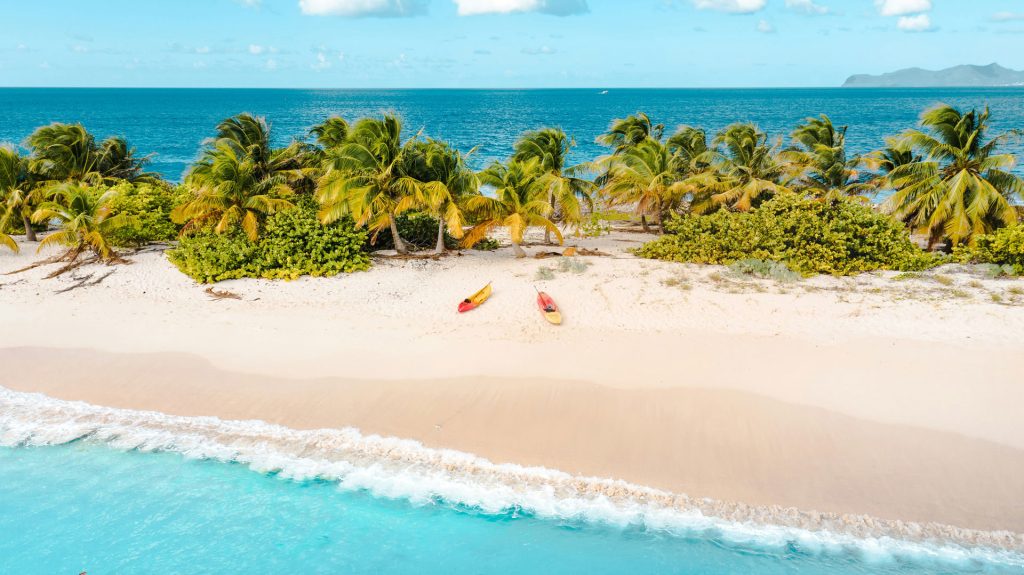
“The most beautiful of all the little isles is Kayrioüacou, where I stopped long enough to note its peculiarities. It is a very beautiful and good isle, capable of supporting a colony…” These words dating from 1656 — 370 years ago — were written by the Frenchman Jean-Baptiste Du Tertre about the still little and beautiful island of Carriacou.
Du Tertre, it is thought, was the first European to set foot on the island (although local expert John Angus Martin, author of the excellent A-Z of Grenada Heritage, suspects that European hunters and fishermen were there before). His description was certainly glowing but also raises a couple of interesting questions about this Caribbean paradise.
First, it is revealing that Du Tertre used without comment a version of the island’s Indigenous — and hence pre-Columbian — name, reportedly meaning “land of many reefs”. By the mid-17th century, almost all the territories of the Caribbean had been given new names by their colonisers — names that reflected European and Christian ownership: St Lucia, St Vincent, Trinidad, etc.
The fact that Carriacou was referred to here by its Indigenous name confirms that it had avoided the name change that signalled European occupation. And this was more than 150 years since Christopher Columbus first sighted and baptised its sister island Grenada.
Second, Du Tertre viewed Carriacou primarily in terms of its colonial potential, which was perhaps strange given that he was a Dominican friar and botanist. But a look at his biography tells us that he was an unconventional friar who travelled extensively in the newly-colonised Eastern Caribbean, visiting and writing about French and English possessions in the region.
He also acted as a sort of clerical estate agent, advising on the sale of colonial property (especially the island of Grenada) to French aristocrats. It was thanks to Father Du Tertre and his survey that the Comte de Sérillac purchased Grenada from the Governor of Guadeloupe in 1657 for £1,890.
Du Tertre — who was born in Calais in 1610 and served in the Dutch army in Greenland before joining the Dominican Order in 1635 — was a man of many parts. Briefly imprisoned by the English in Plymouth as a suspected spy, he was first a missionary to Guadeloupe and then a chronicler of the French Caribbean colonies, writing the four-volume Histoire générale des Antilles habitées par les François (1667–1671). This is widely considered to be the most detailed account of the early French presence in the Caribbean.
He witnessed the transformation of this presence when, in the 1660s and 1670s, Louis XIV’s Finance Minister Colbert formed the all-powerful state-sponsored French West India Trading Company to replace the speculating aristocrats like de Sérillac.
Father Du Tertre’s account of Carriacou was therefore a sort of colonial prospectus. There is no record of how long he stayed on the island, if at all, and he makes no mention of an Indigenous population.
Elsewhere, however, he wrote at length on the customs of the indigenous Kalinago or Carib people, who in many instances violently opposed the European colonisation of their territories. He was inclined to see the Kalinago in Grenada and St Vincent as “noble savages”, innocent and virtuous, even morally superior to the depraved European colonisers — but irredeemably heathen.
Perhaps inevitably, he was ambivalent about slavery, as the French soon introduced forced labour and imported enslaved prisoners from Africa. The Kalinago were largely exterminated, and many preferred suicide to enslavement. While protesting the excessive cruelty inflicted on the Kalinago, Du Tertre implicitly justified slavery by depicting them as “barbarians who have neither faith nor religion”.
Today, a distinctive island culture is Carriacou’s greatest asset as it claims a place in the increasingly competitive Caribbean tourism industry
In 1763, a little more than century after Du Tertre’s visit, Carriacou — with Grenada — was ceded to Britain by France after the Seven Years’ War. Apart from a four-year reoccupation by France (1779–1783), it remained in British hands until independence was granted to the tripartite state of Grenada-Carriacou-Petite Martinique in 1974.
Over two centuries, Carriacou was the smaller sister of Grenada, often neglected and underdeveloped. But like the larger surrounding islands, it was used to produce and export commodities for the benefit of the colonial power, and slavery was at the heart of the enterprise.
Enslavement on Carriacou may have been relatively small-scale, but it was as degrading and pitiless as elsewhere. Cotton was the main export crop, and slaves were put to work on plantations — the ruined remains of which can be seen today.
In the 1770s, soon after the British takeover, some 2,700 enslaved people worked on plantations overseen by only 100 white settlers. Just before Emancipation in 1834, there were 2,800 slaves and 42 whites.
The end of slavery brought little relief to the impoverished majority. A visitor reported in 1897 that he had “landed at a little decaying island called Carriacou, where all the people were wretchedly poor”. Deforestation due to land clearance made much of the island barren, and islanders were often forced to emigrate to Grenada and further afield to earn a living.
Yet the island’s small size and lack of resources probably protected it from the “development” imposed on its bigger neighbours, and notions of community and culture proved resilient during the decades of isolation and poverty.
Today, a distinctive island culture is Carriacou’s greatest asset as it claims a place in the increasingly competitive Caribbean tourism industry. Hiking trails, diving, uncrowded beaches and small fishing and boatbuilding villages are all attractions — but the biggest draw is the series of cultural events and celebrations that link the islanders to their past, and particularly to a shared African heritage.
Alongside the annual regatta and carnival festivities — including the Shakespeare Mas tradition unique to the island — is the now-famous Big Drum Dance, a cultural expression also known as African Nation Dance, which evokes the sounds and beliefs of the West African societies formed by the enslaved from the 18th century onwards.
Big Drum Dance fuses the dance and music of ethnic groups such as the Akan of Ghana with influences from British and French colonial cultures, as well as other African traditions. Dances are ceremonial, traditional and light-hearted, all dominated by the three main boula drums and added percussion with a singer and chorus. They celebrate survival and honour ancestors brought from Africa to the Caribbean during two centuries of slave trading.
The way in which history and myth are mingled is exemplified in the traditional invocation to Kromanti Cudjoe, a character revered as the founder of Big Drum in Carriacou. Legend has it that Cudjoe (or Kojo, an Akan-descended name common across the Caribbean) was a leading Maroon — or escaped slave — in Jamaica who was exiled by the British to Carriacou after a failed uprising in Jamaica in 1795.
There is, alas, no real evidence to support this story since the Jamaican Cudjoe died in 1764 — but it is a fact that another slave named Cudjoe fought alongside the revolutionary Julien Fédon in the French-backed rebellion he led in Grenada against British rule, also in 1795.
Fédon’s revolt failed as well, but he was never captured — and neither was Cudjoe, who was reputed to have escaped from Grenada by swimming the 35 miles to Carriacou. What happened is unknown, but a tombstone marked “Codjo” and dated 1823 exists near the small east coast village of Grand Bay. Big Drum followers believe that the tomb is Cudjoe’s, and that his rebellious spirit is awakened by the sound of the boula drums.
Related
[ad_2]
Source link