
[ad_1]
If you’re a fan of football (or soccer, if you must), you’ll know you’re in for a treat through 19 July when a record 48 nations compete for the 23rd FIFA World Cup. If you’re not a fan, sorry, but please be aware that no fewer than 104 matches (up from 64 in 2022) will be played, dominating television schedules and other media for just over five weeks.
For those living in or connected to the Caribbean, this World Cup is a special event. For the first time in the competition’s history, two nations from the region are taking part in the Finals — Haiti and Curaçao. Hitherto single Caribbean teams have qualified — Cuba (1938), Haiti (1974), Jamaica (1998), and Trinidad & Tobago (2006) — so a record has already been broken before a ball has been kicked.
Haiti and Curaçao are beneficiaries of the FIFA administration that, in 2018, awarded the 2026 World Cup to three co-hosts: the United States, Mexico and Canada. Their successful hosting bid meant that they did not need to qualify by winning groups in the CONCACAF (Confederation of North, Central America, and Caribbean Association Football) regional competition.
This removed three strong contenders, and with two likely qualifiers — Costa Rica and Trinidad — out of form, it was possible for the two island nations as well as Panama to fight their way to the Finals.
It was certainly not just a matter of administrative luck. Both Curaçao and Haiti have had to show considerable determination and skill to make it this far, and both have managed to overcome unusual challenges to claim their place at the big event.
Curaçao, for instance, can claim to be the smallest country — in terms of geography (171 square miles) and population (150,000) — ever to qualify. To reach that goal, The Blue Wave won seven matches and finished their campaign unbeaten. In their last match against Jamaica, it seemed that disaster had struck when the referee awarded a penalty to Jamaica in the last minute of a goalless draw. Only when he reviewed the incident on the VAR screen was the penalty decision overturned and Curaçao went through.
Haiti is relatively large and populous compared to tiny Curaçao, and can look back to 1974 when — in a sublime moment of underdog triumph — they took the lead with Emmanuel Sanon’s goal against Italy, then one of the best teams in the world. But much has happened since then, and Haiti’s football team and management have had to contend with persistent lawlessness and violence during the country’s acute political crisis from 2024. Such has been the unrest that the Grenadiers have been unable to play in the national stadium in Port-au-Prince, and were obliged to stage their “home” games 500 miles away in… Curaçao.
Haiti’s manager Sébastien Migné must be the only manager never to have set foot on his national team’s soil, but he has guided them to qualification due to a solid track record that includes working as assistant to Rigobert Song’s Cameroon squad.
Curaçao, meanwhile, have also faced managerial complications, with the legendary Dick Advocaat — formerly in charge of the Netherlands, Belgium, and Russia, among others — deciding to step down for personal reasons after qualification was confirmed in November 2025. He was replaced by Fred Rutten, another Dutch veteran.
A French manager at Haiti and a Dutch boss at Curaçao: historic and colonial ties are still evident in today’s Caribbean football. Curaçao’s squad is largely comprised of the sons or grandsons of those who migrated from the island to the Netherlands from the 1970s onwards. Curaçao cannot sustain a professional football league of international calibre, and its Football Federation recruits most of its players from the Dutch leagues.
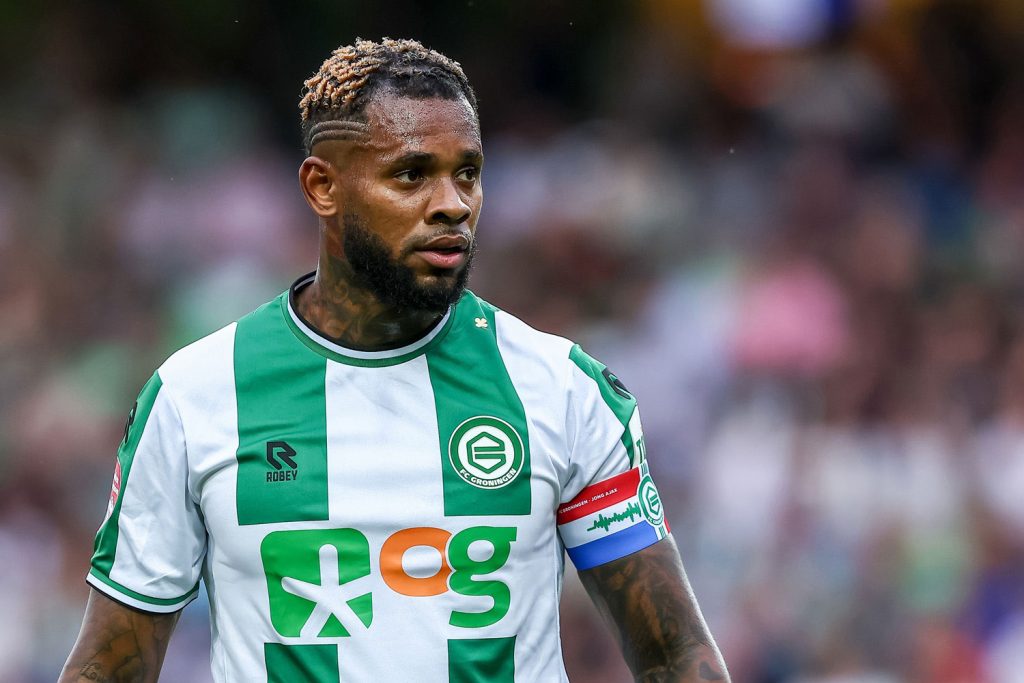
But also symptomatic of the globalisation of football is the fact that members of Rutten’s squad play for teams in the United Kingdom, Israel, Greece, Turkey, and the US. The Bacuna brothers, Juninho and Leandro, have appeared for clubs across Europe including Birmingham City, Glasgow Rangers, and Gaziantep, but both started in Groningen and represented the Netherlands at junior level before switching to Curaçao due to their parents’ nationality.
Likewise, Haiti’s Football Federation cannot rely on local clubs in selecting international players, even though a nationwide league has existed since 1937. Instead, Haiti’s squad is largely drawn from teams in the US, where migrant communities have put down roots. Other players were born in France to Haitian parents, as is the case with Jean-Ricner Bellegarde — raised in the outskirts of Paris and a French youth international before opting to play for Haiti in 2019.
Such has been the unrest that the Grenadiers have been unable to play in the national stadium in Port-au-Prince, and were obliged to stage their “home” games 500 miles away in… Curaçao
Interestingly, Haiti’s latest recruit, the prolific goalscoring Wilson Isidor, was born in Rennes and represented France at four youth levels. He was persuaded to join the Haitian squad in early 2026 when it seemed unlikely that he would be selected by France. “Even though I’m French,” he said, “it was difficult to make that choice. It felt like choosing between my mum and my dad.”
Both Haiti and Curaçao have long footballing histories. Organised competitive matches were held in the Haitian capital in 1912, and clubs such as Violette AC and Racing Club Haiten were founded in 1918 and 1923 respectively. Curaçao was still a Dutch colony when it played its first international match against fellow colony Aruba in 1924, and in the following century it has changed political status several times before becoming a country in its own right in 2010.
Both nations have witnessed widescale emigration during the 20th century and the creation of important diaspora communities in Europe and North America. Their football cultures are hence both historic and modern, local and global.
At press time in early June, the 12 groups of four nations have been drawn, and the two Caribbean nations know the extent of the challenge that awaits them. Haiti must play Brazil, Morrocco, and Scotland; Curaçao face Germany, Ivory Coast, and Ecuador. To progress out of the initial group stage, they would likely need to win at least one of their three matches.
Will Haiti or Curaçao win the World Cup? I doubt it. But this is to miss the point. A victory has already been won in qualifying against considerable odds — both demographic and political — and for the players of the Caribbean underdogs the chance to compete against the giants of Brazil and Germany is a huge prize in itself.
According to Sébastien Migné, “We’ve been handed a tough group featuring Brazil, who in everyone’s book are the most iconic team in World Cup history … Looking on the bright side, we’ll certainly be in the limelight, which is a tremendous reward for the boys.” And Migné will not have forgotten that his Cameroon side beat Brazil in 2022.
“We have the ambition to surprise,” says Curaçao boss Fred Rutten. “And with three games, you have three chances … and at the World Cup there are always surprises.”
Those who call Curaçao home, as well as many millions of neutrals, will have been hoping that the smallest ever nation in the competition can indeed produce yet another surprise.
Six to Watch
Juninho Bacuna
Curaçao
Currently at Dutch club Volendam, he is a hardworking “box-to-box midfielder” who is willing to shoot from distance. Reputed to relish high pressure games, he impressed at England’s Huddersfield Town with his sometimes unpredictable flair.
Leandro Bacuna
Curaçao
Juninho’s older brother, he now plays in Turkey after several seasons in the UK with Aston Villa, Cardiff, and Watford. Along with goalkeeper Eloy Room, he is Curaçao’s most capped player, and is considered invaluable on account of his energy, goal assists, and “thunderous” shot.
Jean-Ricner Bellegarde
Haiti
He has endured a tough season at Wolverhampton Wanderers, but Ricner is an energetic midfielder capable of starting attacks with his close ball control and strength. His composure in possession is complemented by solid defensive work.
Tahith Chong
Curaçao
Chong was born in Willemstad, Curaçao, to parents of Chinese ancestry. Scouted by Feyenoord, he has played in England for Manchester United, Birmingham City, Luton Town, and Sheffield United. He is known for his quick acceleration and flexibility in a midfield role.
Wilson Isidor
Haiti
Uses power and pace to devastating effect, operating as a target man who can hold the ball up and bring teammates into attacking play. He has shown himself to be a real threat at Premier League club Sunderland.
Duckens Nazon
Haiti
The all-time record goalscorer for Haiti, Nazon was born near Paris and has had a long career in France, England, Belgium, and lately Iran. His work rate and clinical finishing have made him the chouchou pèp la (people’s sweetheart) in his parents’ homeland.
Related
[ad_2]
Source link