
[ad_1]
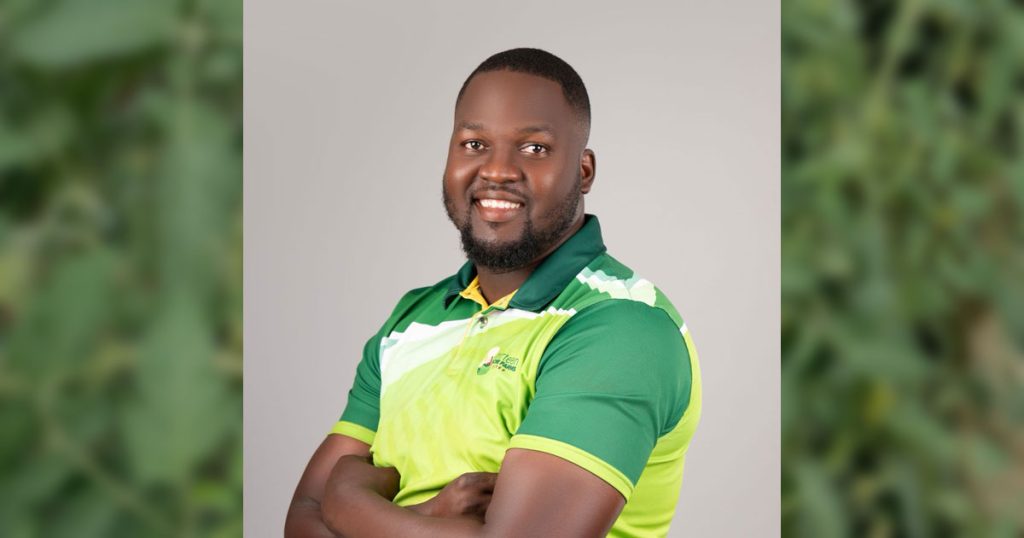
Some of the finest, tastiest, and most nutritious meals are made from freshly harvested, homegrown ingredients obtained from trailblazing local farmers like John Jones, “the Bajan Farmer”. His goal? To inspire people to take up sustainable farming as he ambitiously seeks to reduce Barbados’ food import bill, given that some 90% of the island’s domestically consumed food is imported. Recognised with the Champions of Change Award as part of North America’s 50 Best Restaurants 2026 (NA50BR) last May, his journey is proof that you do — quite literally — reap what you sow.
Jones showed a passion for farming from very early. At just five, one of his prized possessions was his very own lime tree. He took great joy in tending to it, along with the beans and spinach he helped a handyman grow at one of the children’s homes in which he lived after losing his mother.
He was elated to graduate to a kitchen garden after transferring to the Sterling Children’s Home (now defunct) in St Philip parish. While there, the congregation at Beulah Methodist Church bought his lettuce, tomatoes, and other produce.
“They played a big part in our childhood,” he says. And, to this day, the 33-year-old calls his former Sunday school teacher Octavia Gibson “mum”.
The 6’4” Jones later earned a Bachelor of Science degree in Agribusiness on a full basketball scholarship from Illinois State University, before spending three years playing professional basketball. The sport took him to four continents — while also providing myriad opportunities to see and learn about different agricultural approaches and practices he could incorporate into his own farming back home.
Upon his return to Barbados, Jones first worked at a couple of farms including Redland Estates, where he’s somewhat of a celebrity now: owners Thomas and Linda Herbert proudly display a clipping of his Champions of Change achievement on a bulletin board.
During his tenure there, he had the autonomy to grow anything — as long as it made a profit. “The boss was a good manager and it made me confident enough to start my own business,” he recalls.
The high price of farmland and equipment tend to produce more small-scale farmers in Barbados, but in 2022 Jones and his best friend Terry Gale founded Thirteen Acre Farms in St Philip by leasing 13 acres from Gale’s stepdad, prominent businessman Ralph “Bizzy” Williams and mum Shelly, both of whom continuously mentor them.
With the right seeds cultivated within him for success, he built this farm from scratch — ploughed the land, installed plumbing, and still ensures that the farm employs environmentally sustainable practices like their irrigation system, for example, where no water is wasted.
“Most communities are built around access to water. With water, you can create food, and with food, you can create life,” he explains. “Water is the essence of everything, and we are mindful of the gifts that God has given the farm.”
This sense of taking nothing for granted and paying things forward is seminal for Jones. As a child, he was sometimes naughty and would steal a mango or golden apple from a tree somewhere. In adulthood, he did the exact opposite: giving away approximately 5,000 packs of various seeds (courtesy Kooyman Hardware Barbados) to anyone who visited the farm. Broccoli, thyme, bay leaf, chamomile, and oregano took root across the island.
Sometimes, gifts show up unexpectedly too. He saw a truck on the highway carrying approximately 400 tyres for disposal, and had the brilliant idea to recycle them so children could make tyre gardens. This initiative means every child who visits acquires a tyre, seeds, and soil to take home to grow their own pumpkins, sweet peppers, watermelons, or any seeds in stock.
“It’s a way of creating more farmers in children and it gives them a sense of hope,” he enthusiastically shares. “Harvesting their first watermelon, they’ll get a sense of, ‘I can do this, and I can do this again’.”
According to Jones, you can fit two watermelon plants in one tyre and reap eight melons. The heaviest watermelon Jones ever grew weighed 33–36lbs, and in a competition among 400 farmers on X (formerly Twitter) in April, another farmer from Barbados had the biggest — weighing 39lbs!
Jones and other regional culinary experts report that many Caribbean chefs and restauranteurs aren’t attuned to what’s grown in their own countries — compounding the over-reliance on food imports
Farming is hard work but also fun and rewarding for Jones in various ways. Along with the tyre initiative, his team launched vegetable boxes for purchase at the farm and at their weekly community pop-ups. He also practises zero waste, and collaborates with other farmers by allowing them to freely take bad sweet potatoes to feed their livestock like pigs and cattle.
“Cleaning the ground can be challenging, but I’m helping them reduce their food bill and they’re helping me, too,” says Jones.
His dedication and hard work haven’t gone unnoticed, especially as he openly shares good and bad experiences in farming on social media. That authenticity and transparency helped him attract a loyal following on Instagram and X, with roughly 12,000 and counting on each.
Most of all, serving his community and motivating the more than 8,000 school children who’ve toured the farm to contribute to food security by growing their food make him feel fulfilled.
Deservedly, he received the 2023 Prime Minister’s Youth Award for Innovation & Philanthropy in Barbados. And, in January, he was appointed to the International Development Bank Group’s BOLD Catalyst Board.
Jones hasn’t touched a basketball in over five years, turning his focus entirely to farming. “In farming, you’re competing with nature, competitors, market forces,” he says, adding that the most dedicated farmers don’t miss a day. They’re generally solution-oriented with strong resilience and drive. Jones himself is awake and outside before the rooster crows, even when he wants to sleep in.
Over the years, he’s learned to listen to the land as Mother Nature isn’t forgiving. He plants resilient crops and advocates that farmers do the same since no-one is immune to floods.
“I think the mistake farmers are making is that they’re fighting for what humans love versus the conditions,” he says.
He thinks education is key to helping farmers reduce their financial burdens by adapting to seasonal changes. For example, during the rainy season (typically June–December), root crops like yam, cassava, sweet potatoes, and other rain-tolerant crops are safe choices.
Jones also advocates that the highest quality meals come from using in-season produce sourced from local farms. But both Jones and other regional culinary experts report that many Caribbean chefs and restauranteurs aren’t attuned to what’s grown in their own countries — compounding the over-reliance on food imports.
The average citizen often also doesn’t have a real sense of which local farm produces the most milk, or operates the most sustainably, or which are working toward CARICOM’s 2030 targets for a significant reduction in food imports while improving economic resilience and food security.
Through the Champions of Change Award, Jones received a US$10,000 grant, and he’s excited to develop the educational programmes on the farm.
“I want to build a classroom, and put it into the farm to use innovative technology a lot better,” he says. Ultimately, he hopes to have farming introduced as a subject in the national education curriculum — helping address the gaps in education and awareness.
Jones’ birth mum, who died when he was very young, named him John Elijah Nathaniel Jones — all biblical names with multiple meanings, but there is a common theme: “gift of God”. And he has lived up to his name: sharing his gifts and harvest with his community, while making history — not least as the first Caribbean person to win the Champions of Change Award.
He doesn’t consider himself an influencer. But he is certainly a change-maker, embodying the change he wants to see on his island, the region, and globally. It brings to mind Craig Groeschel’s famous quote on leadership: “When you focus on the right inputs, the right outcomes will follow.”
Related
[ad_2]
Source link