
[ad_1]
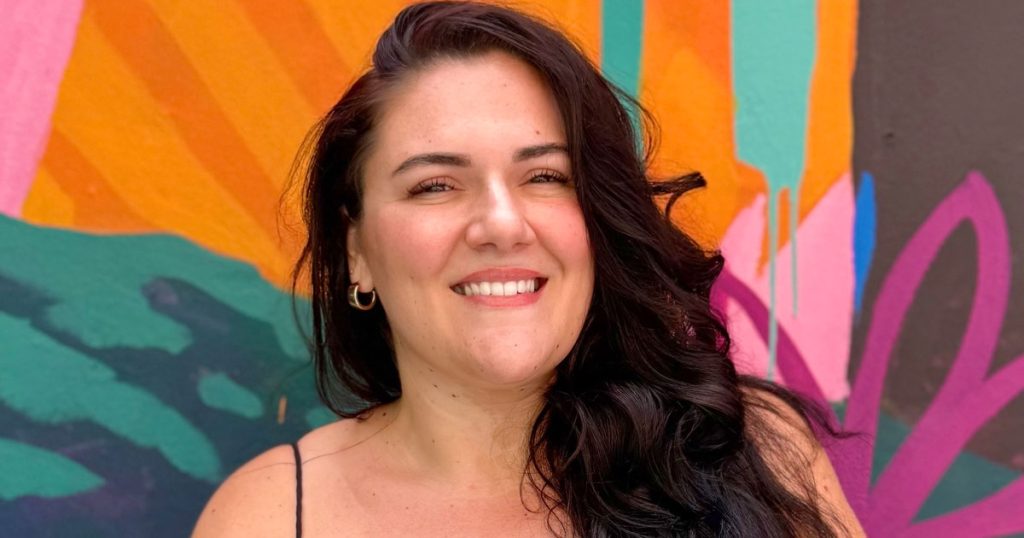
Born in 1995, Bagira Tizraoui — the contemporary visual artist behind the renowned BAGIRA brand in Curaçao — is an exciting Algerian and Hungarian contemporary visual artist who grew up with her parents in Hungary, Algeria, Belgium, and the Netherlands before moving to Curaçao at 18.
Despite hearing from teachers, friends, and family that she had talent as an artist, she never fully believed them — instead innovatively developing her artistic skills by using eyeshadow on the walls of her room. But, by 21, after receiving a commission to paint something for a friend, she quit her job and decided to pursue making a living from painting.
With a passion for music, she started by painting celebrities and musicians of significance to her while continuing to explore and experiment.
I ask her how she became so good at what she does, especially being self-taught. “By looking at many styles of painting, pondering on how I was going to try to do things differently, playing with different media, trying new brushes, experimenting with new techniques, practice, practice, practice,” she explains. “I was not a fan of tutorials. I follow my instincts.”
She started painting by trusting her gut and allowing the strangest things to inspire her — like the colour palette of a scene in a show, or colours her mood would drive her to use. Her art “explores identity, heritage, femininity, always grounded in emotion rather than literal representation,” she says.
Descended from the Kabyle Amazigh people of northern Algeria, she also drew on her ancestral traditions. Amazigh women have long been seen as the guardians of identity, storytellers, artists, and leaders whose strength shaped entire generations, she explains. She feels that, in her pieces, “you see many of the elements that continue to define Amazigh women today”.
One of her recent series embraced the elements of her Kabyle culture, weaving symbols, patterns and stories from rich heritage. “I feel like the ambassador of my culture, sharing the story of my people few have ever heard of, from the other side of the world,” she says.
Nonetheless, it is in Curaçao that the artist in her was born, nourished by the island’s spirit of resilience, its beauty, unity, and the support of its people. “Through my art, I aim to inspire and empower people, to honour humanity, bridge cultures, and remind us of the beauty and power that live inside us all.”
She has developed a unique portraiture style, and uses bold, dramatic colour palettes in all her paintings. These striking creations adorn many buildings across the island: restaurants, hotels, private homes, and some government buildings, like the Ministry of Justice. They can also be seen at well-known beaches and on various streets around the city.
One of her larger recent commissions was to paint the interior of the biggest local bank on the island. She was also asked to paint a large mural at Curaçao’s International Airport, unveiled in 2024, honouring the late local hero Margareth Abraham. She was also voted the #1 Artist of Curaçao (both 2024 and 2025).
She loves working on large pieces and using acrylic (it dries fast, is versatile, and she appreciates the ease with which the paint can be layered), while her figurative and abstract art lets her viewers project themselves into her work. “Through the gaze, the posture, the texture I apply, and the light I create in each painting or mural, I give each figure a sense of soul,” she says.
The light in her creations is one of the distinctive features in her work: it makes her paintings and murals glow. It creates a feeling of warmth and atmosphere, drawing the eyes of onlookers and passersby.
It was hard for me to tear myself away from her pieces; whether it was the grand size of the ones I encountered or the overwhelming beauty and prominence of colour in these statement pieces, I felt I was being drawn in.
One of her more recent pieces, in 2025, was a Pride mural in the Punda area, which she said was created as a celebration of visibility, freedom, and belonging. “Public art has long been an essential part of my practice, allowing my work to exist beyond gallery walls and become part of everyday life, and I am so happy doing this,” she affirms. “My murals are not decorative statements, but social and cultural conversations that are accessible, emotional, and representative.”
Today, she is not just well-recognised and respected on the island, but is being sought after by international collectors and writers. She now has paintings in 18 countries, and founded The Gallery by BAGIRA, located in Kura Hulanda Village — one of the most historic and visually striking areas in the heart of Willemstad (and which was featured in the recent May/June issue of Caribbean Beat). She believes the space is “a creative hub where fine art, street art influences, and personal narrative coexist”.
BAGIRA sells many of her paintings online, but prefers meeting customers in person, to get to know them. So, when next in Curaçao, make it a point to visit her at The Gallery and look for her beautiful murals all around the island.
Related
[ad_2]
Source link