
[ad_1]
This month’s reading picks from the Caribbean, with reviews by Shivanee Ramlochan of Village Weavers by Myriam J.A. Chancy; Some of Us Can Go Back Home by Yashika Graham; An Ordinary Landscape of Violence: Women Loving Women in Guyana by Preity R. Kumar; and Ibis by Justin Haynes
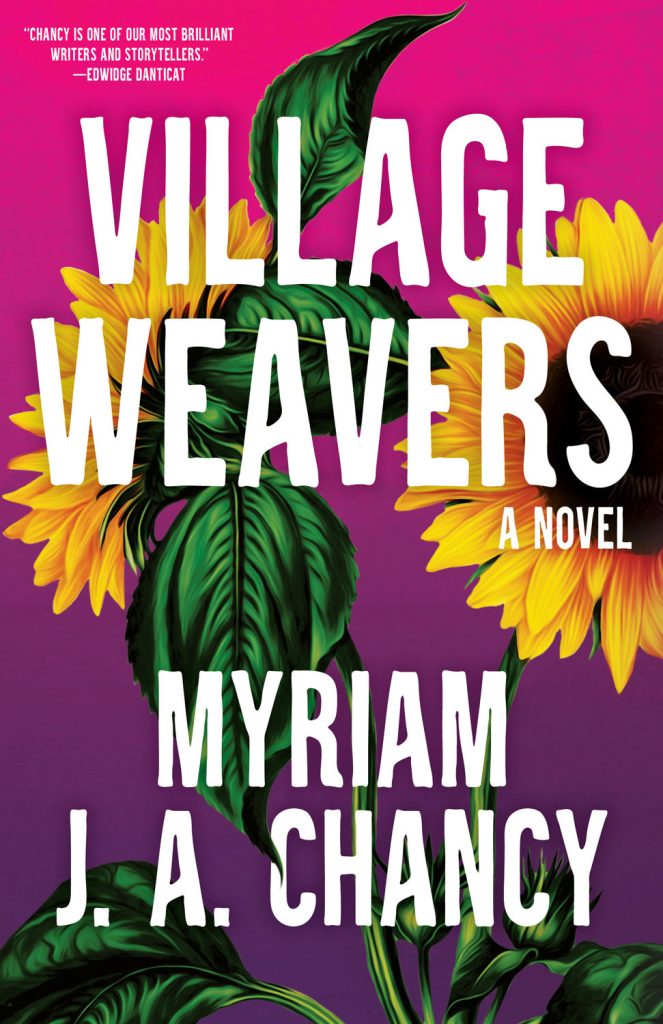
Village Weavers
by Myriam J.A. Chancy (Tin House Books, 352 pp, ISBN 9781959030379)
Winner of the 2025 OCM Bocas Prize for Caribbean Literature, Village Weavers winds a spool of unbreakable thread around the lives of two Haitian children, Gertie and Sisi. Slipping back and forth through decades, in and out of cities and crises, their allegiance cracks — but never fully fractures — beneath the weight of history, the spectres of illegitimacy, and the homegrown horrors of secrets buried deeper than navel strings. Chancy’s prose is both luminous in its emotional excavations, and as grounded in reality as rich, resourceful earth itself. “Sisterhood”, one girl reflects — longing for the other with a palpable grief — “is like a loose net in which fishermen catch fish that never see the hands of their captors, a net full of holes and empty promises that doesn’t let you go, but doesn’t hold you close either.”
Some of Us Can Go Back Home
by Yashika Graham (Blouse & Skirt Books, 80 pp, ISBN 9789768267405)
Shortlisted for the 2025 OCM Bocas Prize for Caribbean Literature in the poetry category, Yashika Graham’s debut collection teems with a verdant and alert ancestry. It is both annunciation and reckoning, both family tree and fighting chant, both lilting love letter and dire comeuppance. Faithful in their respect for Jamaican poetic heralds like Edward Baugh and Lorna Goodison, the speakers of these poems yet carve their own paths through the teeming mysteries of life’s grievances and graces. At their empyrean heights, Graham’s images are so powerful they both shatter and reassemble the heart. In the wake left by a brother’s death, “There is no oil, no ring, no prayer, / just the mesh of fall-over tired / and the soft-soft of a place / where you have been.”
An Ordinary Landscape of Violence: Women Loving Women in Guyana
by Preity R. Kumar (Rutgers University Press, 198 pp, ISBN 9781978819047)
Attentive in its scholarship, ethically focused on the remits of its research, this is not only a text of academic merit, but a living register of queer experience in postcolonial Guyana. Kumar avows her commitment to the book’s 33 interview subjects in unambiguous, even devoted terms, underscoring her mission “to describe what happens to these women-loving women when violence is folded into their lives”. Unmooring that violence from its basic dictionary definitions, the author traces queer Guyanese women’s traumas through their sexual, sociological, and political frameworks, showing how such harms are insidious — not incidental — to the natural and built environment of an entire nation. The intimacies that unravel from the lived experiences within this work are at once cautionary and triumphant, marking so many survivals snatched from untimely ends.
Ibis
by Justin Haynes (The Overlook Press, 352 pp, ISBN 9781419772771)
Where does an entire village put its guilt? In Trinidadian Justin Haynes’ debut novel, the answers lie stifled in the sands of coastal New Felicity — a tiny fishing locale dotted with colourful characters of ill-repute harbouring a young Venezuelan refugee girl, Milagros. Taking a zigzagging approach to its often-dizzying narrative, Ibis is a flinty-eyed exploration of the consequences of political greed, carnal misrule, and insurrections soaked in plantation blood. Along the winding path of Haynes’ prose, packed with humorous repetitions and bacchanal-dyed references, expect to encounter a true motley crew. Herein is a disillusioned university graduate nursing an impossible-to-finish project; a jilted quasi-gentleman who only speaks binary; a pair of jetty-destroying expatriate thugs; and a shark-punching heroine with a heart of gold. For all that, Ibis is more than a laugh-a-minute: in its sharpest moments, it stuns with a desperate sorrow.
[ad_2]
Source link