
[ad_1]
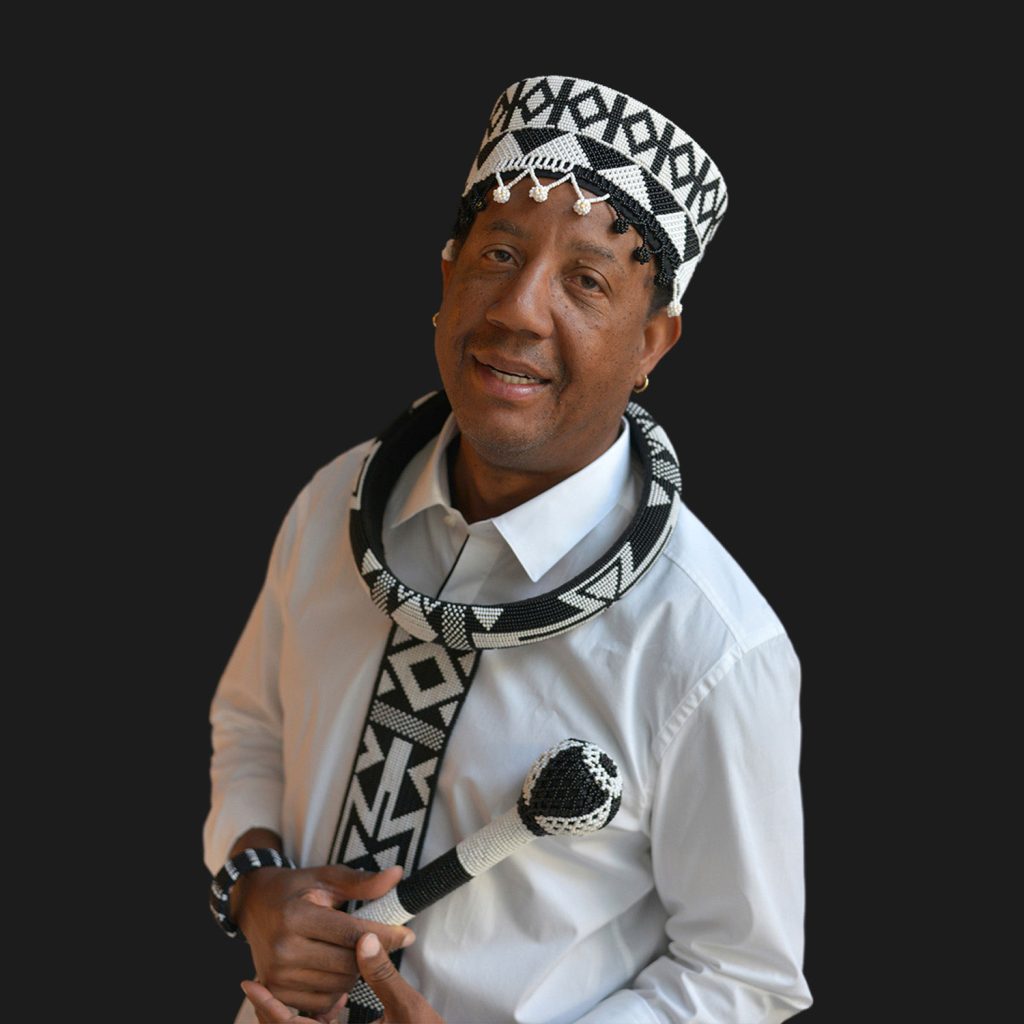
If there were an award for multitasker of the year, South Florida-based cultural entrepreneur Alfonso D’Niscio Brooks could well be the frontrunner. The St Maarten-born dynamo leads AfriKin, a multi-faceted nonprofit organisation that sits at the intersection between art, culture, and community engagement.
Because of AfriKin’s broad scope, Brooks walks a sometimes-precarious tightrope in coordinating the organisation’s various endeavours. These include overseeing Eco-Africa, the community outreach arm; curating a marketplace that offers African-themed merchandise; and producing two popular annual multicultural extravaganzas.
One is A Taste of AfriKin — an African and Caribbean culinary, art, and music experience. The other is the AfriKin Art Fair, which runs 30 November–7 December at the Scott Galvin Community Center during Miami Art Week. This year’s event is curated by Dr Joseph L Underwood, and features daily exhibitions, performances, workshops, and a runway presentation.
Significantly, the path leading to Brooks’ founding of AfriKin was a circuitous one. “I grew up in the music industry,” he explains. “My dad owned a studio, and it was there that I honed my sound engineering skills.”
Brooks recalls the first time his skills were put to the test. “The Mighty Cat, a local soca singer, came into the studio to have a record mixed. Other engineers had tried, but he wasn’t satisfied with the sound. So, he persuaded my dad to let me give it a try.
“I mixed the song, which Cat submitted in the Road March competition. And he won. After that, everybody wanted that same sound. Artists from nearby islands would fly to St Maarten to work with me. I ended up working with the Grandmasters Band and WCK to 17 Plus, Jamband, the Imagination Brass, the Wrecking Crew Band, and many others.”
Brooks left St Maarten for New York in 1996, and from there worked in Brooklyn with Charlie’s Records. “[It was the] number one record company for music from Trinidad,” he says. “I worked with all the big acts, including the Mighty Sparrow, King Short Shirt, and the Mighty Shadow.”
In 1998, Brooks formed Rockers Movement and began promoting shows at venues around New York State. “By far the biggest festival that I did was Reggae Carifest, on Randall’s Island in New York City, which drew 30,000 people,” he says. Brooks also promoted shows at celebrated venues like Madison Square Garden.
In 2009, Brooks relocated to Miami. “Actually, I came to retire,” he said.
That wasn’t to be, however. Brooks soon picked up where he had left off in New York, promoting reggae music festivals in venues all over South Florida. But not all of Brooks’ offerings were universally well-received.
“One year, I did a show during Jamaican Independence weekend, for which I brought in sound system artists from around the world. But the Jamaicans were minimal in their support of it. I later heard through the grapevine that it was because I wasn’t Jamaican.”
Brooks then pivoted from the reggae festivals to AfriKin in 2015, and encountered a different kind of pushback: “my staff thought I was crazy,” he says. “My decision was fuelled by a desire to showcase the diversity and richness of African culture. Equally important, I wanted programmes that would bring people together, not just from the African continent but globally, to build cultural bridges. In short, the idea was to emphasise kinship — a kinship that transcends racial and ethnic divisions. That’s why I chose the name AfriKin, which is a fusion of the words Africa and kinship.”
Brooks’ first AfriKin event took place at MOCA (Museum of Contemporary Art) in North Miami. “We had Vaughn Benjamin, the lead singer of Midnite and Akae Beka; Lloyd Stansbury, entertainment lawyer and author; Jahfé, a popular Miami-based reggae band; an Afro-Cuban musical troupe; African drummers and dancers; and a lady from Ethiopia who performed a coffee ceremony.”
To promote the event, Brooks employed a strategy straight out of the guerrilla marketing playbook. “I had our street team blanket the area from Aventura to Coconut Grove with posters containing only the AfriKin logo, website landing page, and the date.” And it paid off. “The place was packed,” he recalls.
Since then, AfriKin has gone on to rack up success after success — but funded primarily out of pocket, at a loss. Enter Scott Galvin, a former North Miami City Council member. “He went to bat for me last year when the North Miami City Commission was apprehensive about providing AfriKin financial support.”
But for Brooks, financial reward is far from being the sole motivating factor. “We are driven more by a desire to present offerings that stimulate the mind as much as the body. AfriKin is not about entertainment for entertainment’s sake; it’s a movement. AfriKin serves as a beacon of hope and unity, and it brings together academics, artists, and other thought leaders to engage, educate, and uplift our communities.”
So, in light of all that Brooks has managed to accomplish to date, where does he see himself and AfriKin in the future? “I would love to see an AfriKin in Africa. That would make me a happy person.”
Indeed, if past accomplishments are any indication, Brooks’ vision could very likely manifest.
Related
[ad_2]
Source link