
[ad_1]
What if Earl Lovelace’s rhythmic prose had never breathed life into Aldrick’s dragon, the creature “that would contain the beauty and threat and terror that was the message he took each year to Port of Spain”? We may have missed the message ourselves — of cultural expression as resistance, of holding onto identity and personal dignity in a rapidly changing world — and we would be that much poorer for it. Yet, in the Caribbean, countless stories like The Dragon Can’t Dance never get told, especially if the medium for the telling is film.
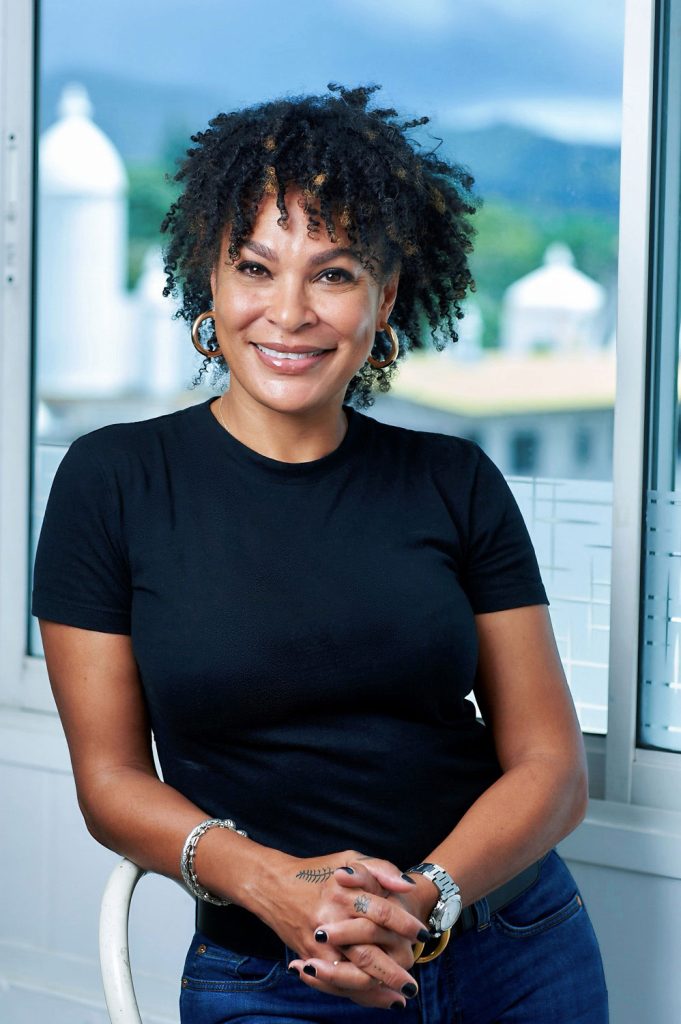
This, more than anything, was the impetus for Lovelace’s daughter Asha Lovelace — filmmaker and founder of the Africa Film Trinidad & Tobago (AFTT), a festival that celebrated its 10th anniversary in May 2024 — to take the next logical step: creating a regional, inclusive, filmmaker-centric cinema showcase, aptly dubbed the Caribbean Film Festival (CFF).
When, in the early 2000s, Lovelace returned to Trinidad from the prestigious Escuela Internacional de Cine y TV in Cuba, she set about working on her first feature, based on her father’s short story “Joebell and America”. “When I decided I wanted to do film,” she recalls, “it was actually from reading Caribbean literature; I could just see these stories on the big screen.”
She soon realised that people couldn’t quite wrap their heads around the kind of film she was talking about making; their frame of reference was the Hollywood blockbuster. Lovelace was interested in contributing to the unique language of Caribbean cinema established by classics like Memorias del Subdesarrollo, The Harder They Come, and Rue Cases Nègres.
Lovelace was interested in contributing to the unique language of Caribbean cinema established by classics like Memorias del Subdesarrollo, The Harder They Come, and Rue Cases Nègres
As she fought to get Joebell made, she thought, “We really need to have a film festival because we need to build an audience with an appreciation for the kind of work Caribbean filmmakers are trying to do.”
The seed was planted, but it took some time to germinate. After her film successfully premiered, many challenges persisted — from funding to developmental and other types of support. Following an invitation to FESPACO (the Pan-African Film & Television Festival of Ouagadougou held biannually in Burkina Faso), Lovelace got into the African film scene and became the Caribbean diaspora representative for the Federation of Pan-African Filmmakers, which wanted to include the diaspora within the growth of African film.
Moved by the work of directors like Abderrahmane Sissako, and in the absence of a steady diet of films from the Caribbean, the freedom with which African filmmakers expressed themselves began to shape how Lovelace wanted to tell our own stories.
AFTT, a curated festival that began in 2014, emerged from that experience: “All the work I’ve done has been filmmaker-centred because I’ve always been trying to find solutions for myself.” A few years in, young filmmakers began clamouring to have their own films screened, morphing AFTT into a platform where local films were in conversation with African films.
With CFF, she’s now moving the conversation across the archipelago. As if to solidify its “for filmmakers, by filmmakers” ethos, the festival’s launch — which took place on 13 February, 2025 in Port of Spain — opened with the screening of an immersive new short in the Caribbean experimental genre.
Commissioned and produced by CFF, this is something the festival will do every year, working with different directors. “It’s about elevating regional filmmakers, illuminating the potential of Caribbean film, across the board, fairly,” Lovelace explains. “And I don’t think anybody, really, has done that. I may not have all the answers, but I feel like now is a good time to see how we can help push this industry; get it moving again.”
It’s an ambitious vision for a destination festival born in Trinidad & Tobago and being raised, so to speak, across the Caribbean — “like Caribbean Premier League cricket for film,” Lovelace laughs. The team, which includes Executive Director Melanie Jones-Powell, already has a lot of initiatives in train. The Queen Collective, for example, pioneered by Queen Latifah, focuses on achieving more gender and racial equality in film through mentorship, and production and distribution support.
“As a women-led festival,” Lovelace declares, “women in film is very important to us. We also need to have that kind of connection with the global industry, which has been lacking. We’re being very selective about who we bring to the festival because we want it to be worthwhile. The aim is to get industry people who could help advance our projects and have interest in what we’re doing.”
As the new festival builds this ecosystem on the existing networks AFTT has strived so hard to forge, it sees itself becoming “the epicentre of everything Caribbean film, a place that is welcoming and open, where if you want training, production support, funding, educational or networking opportunities, you can get it all.”
Despite the challenges the team may face in terms of moving the festival from one location to the next, Lovelace is determined to make it happen through collaboration: “It’s a big vision; we don’t want to do it alone — and we don’t need to, because there are a lot of people who have been doing good and important work in the field.”
CFF has already partnered with the Trinidad & Tobago Green Screen Environmental Film Festival; Animé Caribe, an annual celebration of animation, Caribbean culture and art; and the Tobago Performing Arts Company to help position the island as a filming location. “When we move, they move as well,” Lovelace affirms. “That is the idea throughout.”
Global linkages include Tech Beach Retreat, which will help the festival explore the role of new technologies — including AI — in filmmaking; the Dominican Republic-based Muestra Karibe Film Festival; and the Brooklyn Caribbean Literary Festival, to align with the literature coming out of the region and explore how it can potentially be translated into film.
The Queen Collective, pioneered by Queen Latifah, focuses on achieving more gender and racial equality in film through mentorship, and production and distribution support
The Nvision Latino Film & Music Festival, run by entertainment industry innovator Lex Borrero, has asked CFF to curate a block for his festival in Miami in October. “Nvision has links to Amazon, so we are not only exhibiting; we want to see how we could get the films out as well,” Lovelace says.
There is also a social responsibility component to the festival, via a community film project with interdisciplinary artist Marvin “Mr King” Lewis (who “sees it as a real crime-fighting initiative”), and a short made by students of The St Jude’s Home for Girls in Trinidad, which will be given a festival premiere. Playing a supporting role in the St Jude’s project is the Mt Hope-based Digital Film Institute, which offers training and certification. In return, the CFF has been assessing their student films, some of which will be selected for the inaugural festival, carded for 11–14 June in Trinidad.
CFF continues to be in conversation with festivals on the continent and will send blocks of Caribbean films to the Africa International Film Festival (AFRIFF) and the Abuja and Kaduna International Film Festivals, both Nigeria-based.
“We are not talkers; we are doers,” Lovelace says. “There are lots of festivals around, so funders need to know where they want to align themselves. We’re happy to let them see what we’re doing, the collaborations we have, and then they make their decisions — but our intention is clear.”
While the festival’s alliances have the power to facilitate access to other markets, Lovelace also believes the Caribbean has the capacity to support itself: “That’s the only way the global industry will start taking us seriously. You can’t sell one little film and say, ‘We make it’; people would obviously want to see more. We have to buy into what it is we’re selling. This is a cultural tourism product, reflective of the spirit of the Caribbean. I think we’re ready.”
[ad_2]
Source link